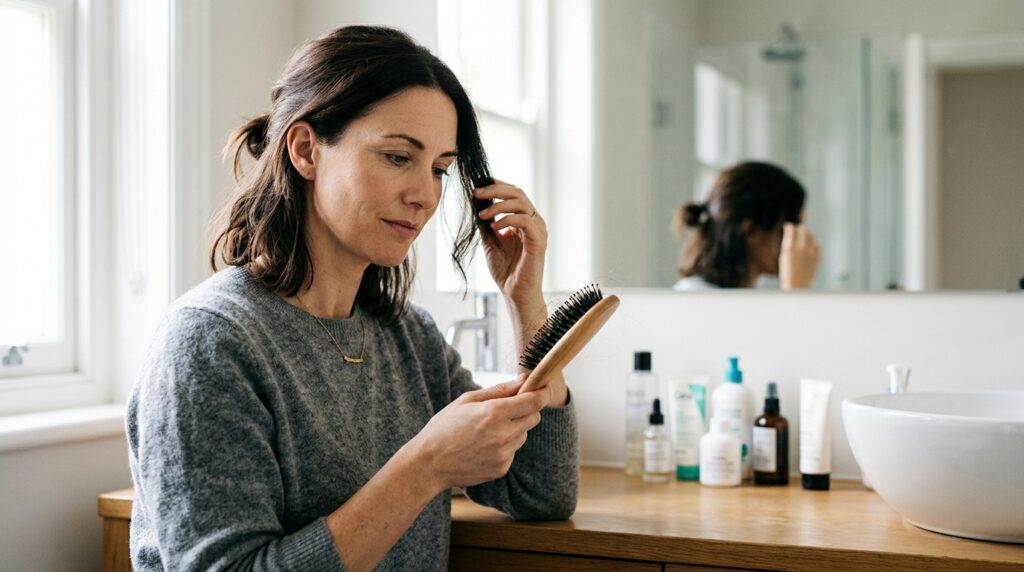

Women lose hair differently from men, and that distinction matters more than most people realize. The pattern looks different, the hormonal drivers are more complex, the emotional weight tends to be heavier, and the treatments that work for men often do not translate directly to women. Yet most of the information available about hair loss was originally built around male pattern baldness, leaving many women confused about why their hair is thinning and what they can actually do about it. This guide addresses that gap directly, covering the biology, the clinical differences, and the treatment options that are genuinely suited to female hair loss.
How Female Hair Loss Differs From Male Hair Loss in Pattern and Appearance
The most immediate difference between hair loss in men and women is visual. Male pattern baldness tends to follow a recognizable progression: a receding hairline at the temples, thinning at the crown, and eventual baldness across the top of the scalp. Women almost never go completely bald from pattern hair loss. Instead, female pattern hair loss typically presents as diffuse thinning across the central scalp, a widening part, and a reduction in overall density without a sharply receding hairline.
The reason for this comes down to how the hair follicle responds to the same androgen dihydrotestosterone, or DHT, in different hormonal environments. In men, DHT activity tends to be concentrated at the hairline and crown because follicles in those areas carry a high density of androgen receptors. In women, estrogen and progesterone normally act as a counterbalance to androgen activity. When that hormonal balance shifts, either gradually with age or more abruptly after menopause, pregnancy, or conditions like polycystic ovary syndrome, thinning tends to occur diffusely rather than in a defined pattern.
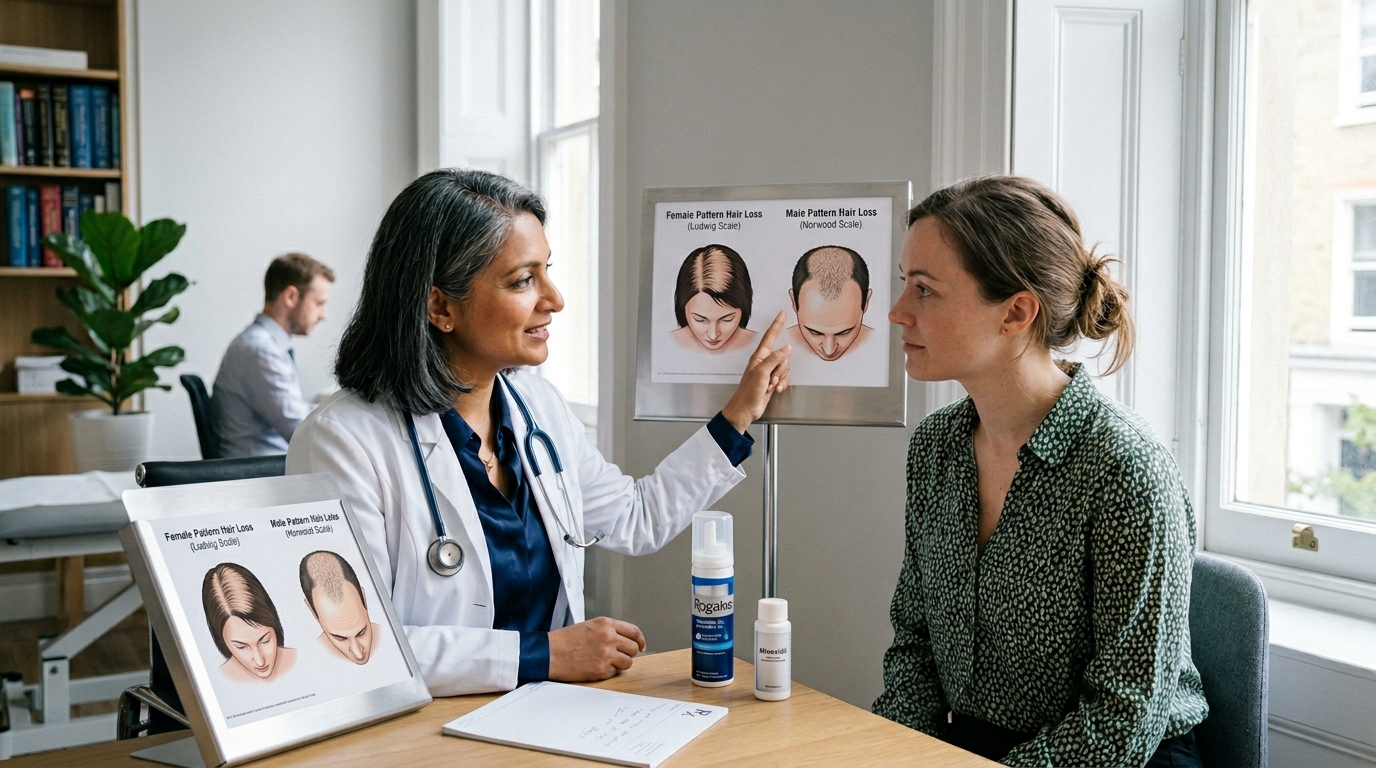
This difference in presentation matters clinically because the tools used to assess and diagnose hair loss in men, including the Norwood scale, do not accurately reflect women’s experiences. The Ludwig scale is the classification system for female pattern hair loss, and even that captures only one of the several types that affect women.
The Causes Behind Hair Thinning in Women Are More Varied
Male hair loss is predominantly androgenetic. While exceptions exist, the conversation about men usually centres on DHT sensitivity and genetic susceptibility. The conversation for women is considerably broader.
Female hair loss causes include androgenetic alopecia, but also thyroid dysfunction (both hypothyroidism and hyperthyroidism can trigger shedding), iron deficiency, nutritional gaps including low ferritin and vitamin D, postpartum hormone shifts, chronic psychological stress, autoimmune conditions like alopecia areata, and the hormonal disruption that accompanies perimenopause and menopause.
This complexity is one reason women are often frustrated by the hair-loss conversation. A woman experiencing significant shedding after pregnancy is not dealing with the same mechanism as a woman whose part has been widening slowly over a decade. Yet both may find themselves being handed the same off-the-shelf suggestion of minoxidil without any investigation into the underlying cause.
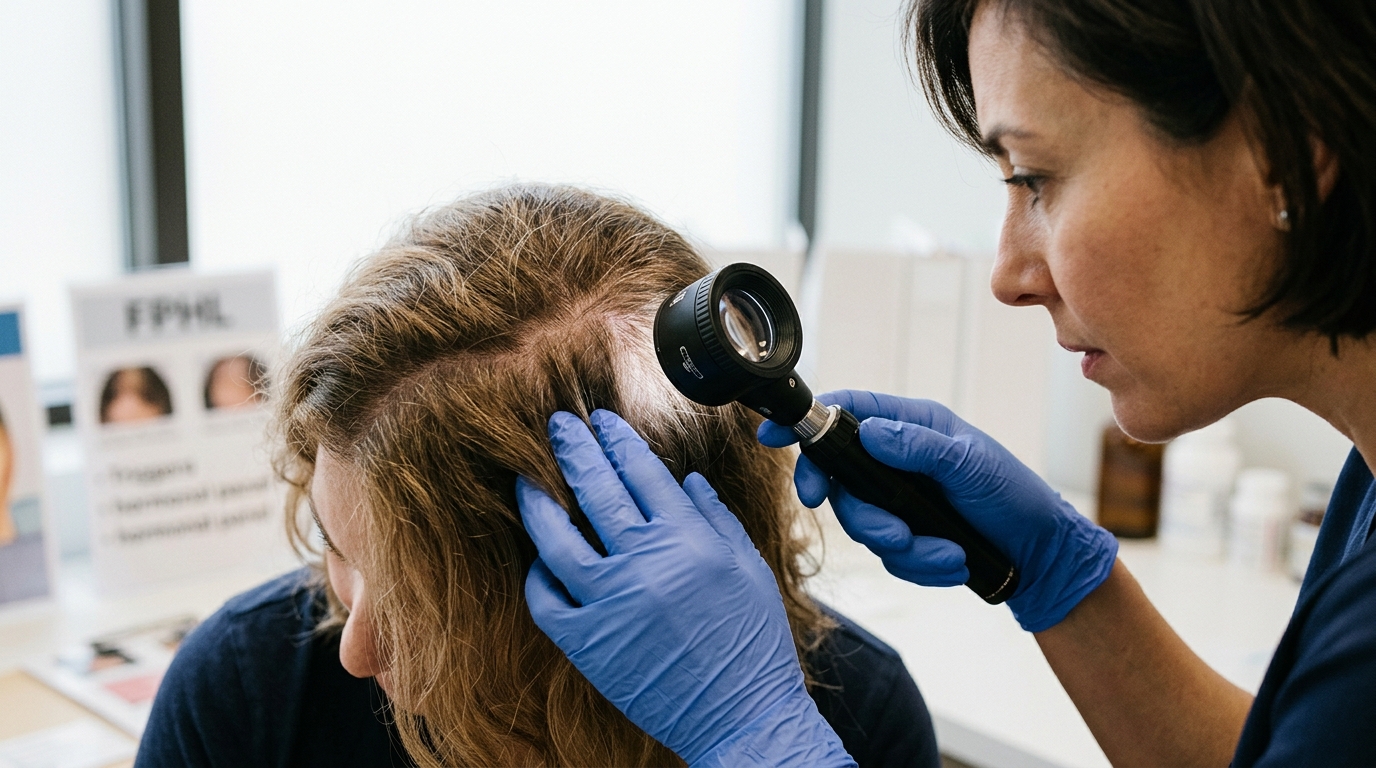
Identifying the cause matters because it shapes treatment. A woman whose hair loss is driven by iron deficiency will not respond to a DHT blocker. A woman with autoimmune-driven alopecia areata needs a completely different clinical approach than someone with androgenetic alopecia. A provider who evaluates the full picture, including blood work and health history, is far more likely to recommend something that will actually work.
Why Treatments for Female Hair Loss Differ From Male Treatments
This is where the clinical divergence becomes especially significant. Finasteride, the oral DHT-blocking medication approved by the FDA for male pattern hair loss, is not approved by the FDA for women. It carries a category X pregnancy risk, meaning it can cause serious fetal abnormalities. While some licensed providers do prescribe it off-label to postmenopausal women in specific clinical contexts, it is not a routine first-line option for most women the way it is for men.
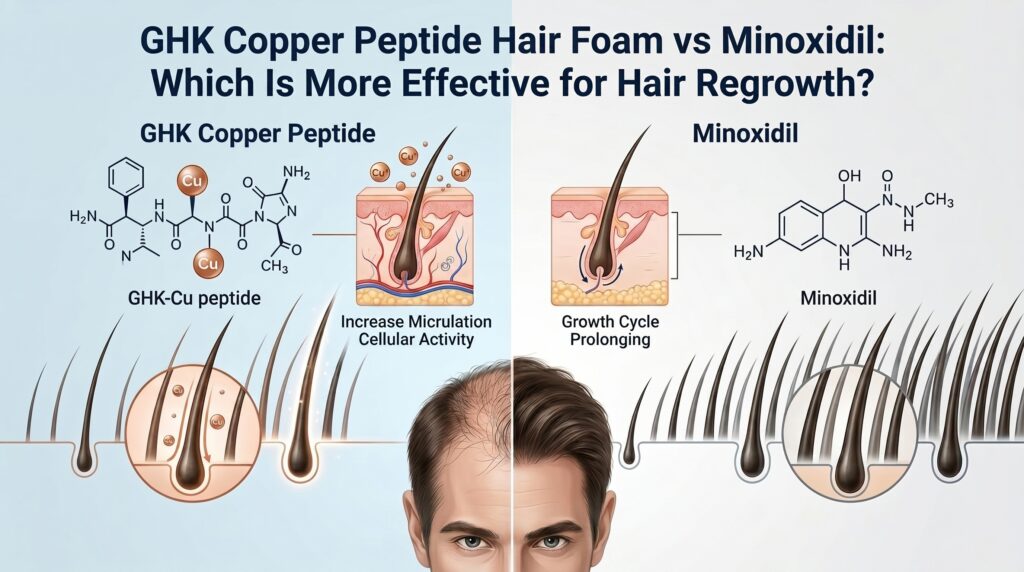
Minoxidil, on the other hand, is approved for women, though typically at a lower concentration than for men. It works by extending the anagen, or active growth, phase of the hair cycle and improving blood flow to the follicle. It does not block DHT, which means for women whose hair loss is androgen-driven, minoxidil may slow things down without fully addressing the underlying cause.
Spironolactone is another option frequently used in women with androgen-driven hair loss, particularly those with PCOS or other signs of hyperandrogenism. It is a diuretic with meaningful anti-androgen properties and is also off-label for hair loss, but has a reasonably established track record in dermatology for female patients.
Newer approaches using peptide therapy, specifically GHK copper peptides, have gained attention as a hormone-free option that supports follicle health, improves scalp circulation, and reduces the low-grade inflammation that can contribute to ongoing shedding. For women who are not candidates for or not interested in hormonal approaches, peptide-based regimens represent a genuinely useful alternative.
Combination therapy consistently outperforms single-agent treatment in the clinical literature. Using a topical treatment to stimulate the follicle directly, combined with an oral agent that addresses a systemic driver, tends to produce better outcomes than either approach alone, particularly for women with moderate pattern hair loss.
What Women Should Actually Look for in a Hair Loss Treatment
Given how varied the causes and treatment pathways are for female hair loss, a few principles are worth holding onto when evaluating options.
First, the cause should be identified before the treatment is selected. An approach that works for one mechanism may be entirely ineffective for another. Blood work covering thyroid function, ferritin, vitamin D, and, where relevant, androgen levels is a reasonable starting point.
Second, prescription-strength formulations matter. OTC hair products, including shampoos, supplements marketed for hair, and retail minoxidil at low concentrations, operate at doses that are generally too low to produce meaningful clinical change in the follicle. Prescription-grade actives, compounded at therapeutic concentrations and reviewed by a licensed provider, are what move the needle.
Third, patience is not optional. Hair cycles move slowly. Most women will need three to six months before they notice reduced shedding and closer to a year before they can reliably assess density improvement. Stopping treatment early because month two looks the same as month one is one of the most common reasons women conclude that something did not work when it actually needed more time.
How Green Cap Health Approaches Female Hair Loss
Green Cap Health is a licensed US telehealth practice serving patients in Texas with prescription-strength hair loss treatment, online consultations, and same-day provider review. The platform is designed for both men and women, and the prescribing approach reflects the fact that female hair loss requires a different clinical lens.
For women navigating pattern hair loss or diffuse thinning, available options include the Hair Growth Combo of Capsules and Serum, which pairs an oral DHT-blocking formulation with a topical serum for dual-action coverage, and the GHK Copper Peptide Hair Growth Foam, a hormone-free peptide option suited for women who prefer to avoid androgen-blocking agents or who have sensitive scalps.
Every prescription is reviewed by a licensed US provider before it ships. There are no waiting rooms, no referrals, and no insurance requirements. The process starts with a free two-minute hair assessment, and shipping is discreet.
Start your free hair assessment at Green Cap Health
Frequently Asked Questions About Female Hair Loss
Q: Why do women lose hair differently from men?
A: Women and men share the same androgen-driven mechanism behind pattern hair loss, but women’s hormonal environment, specifically the presence of estrogen and progesterone, creates a different pattern of follicle sensitivity. Women also experience more varied underlying causes, including thyroid conditions, nutritional deficiencies, postpartum changes, and autoimmune triggers that are less common contributors in male hair loss.
Q: What is female pattern hair loss?
A: Female pattern hair loss, also called androgenetic alopecia in women, is diffuse thinning across the top and crown of the scalp, usually presenting as a widening part rather than a receding hairline. It is the most common form of hair loss in women and is influenced by genetic factors and androgen sensitivity.
Q: Can women use the same hair loss treatments as men?
A: Not always. Finasteride, the standard oral DHT blocker for men, is not FDA-approved for women and carries a pregnancy contraindication. Women have their own treatment options, including minoxidil (approved for women), spironolactone (off-label but commonly used), GHK copper peptides, and combination regimens tailored to the female hormonal environment.
Q: What causes sudden hair thinning in women?
A: Sudden or accelerated shedding in women is most commonly associated with telogen effluvium, a temporary disruption of the hair cycle triggered by stress, illness, nutritional deficiency, surgery, or postpartum hormonal shifts. Unlike pattern hair loss, telogen effluvium often resolves once the underlying trigger is addressed.
Q: How long does it take for female hair loss treatments to work?
A: Most women notice a reduction in daily shedding within two to three months of starting treatment. Visible density improvement generally takes six to twelve months of consistent use. Hair cycles are slow, and early shedding in the first few weeks after starting treatment is normal and not a sign that the treatment is failing.
Q: Is prescription treatment better than OTC options for women’s hair loss?
A: In most cases, yes. Over-the-counter hair products typically contain active ingredients at concentrations too low to produce meaningful follicle-level change. Prescription formulations, reviewed and issued by a licensed provider, deliver therapeutic doses that OTC products cannot match.
Q: What is GHK copper peptide and how does it help with hair loss?
A:GHK-Cu is a naturally occurring copper-binding peptide that supports follicle health, improves scalp microcirculation, and reduces the inflammation that can accelerate shedding. It is a hormone-free approach to hair loss, making it particularly relevant for women who are not candidates for or not interested in androgen-blocking medications.
Advance Your Longevity Journey
Our clinical team provides personalized senolytic assessments based on the latest research protocols.