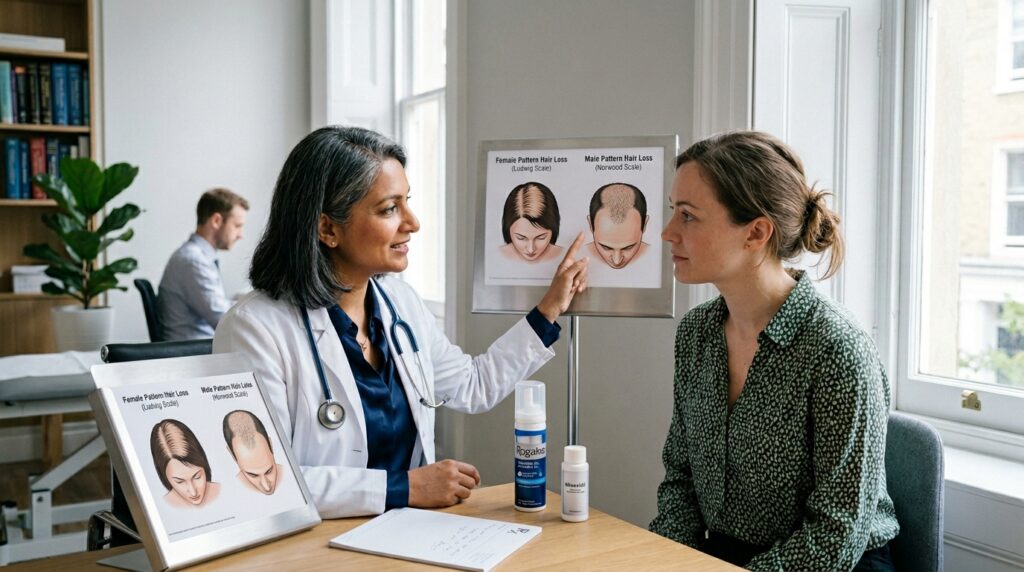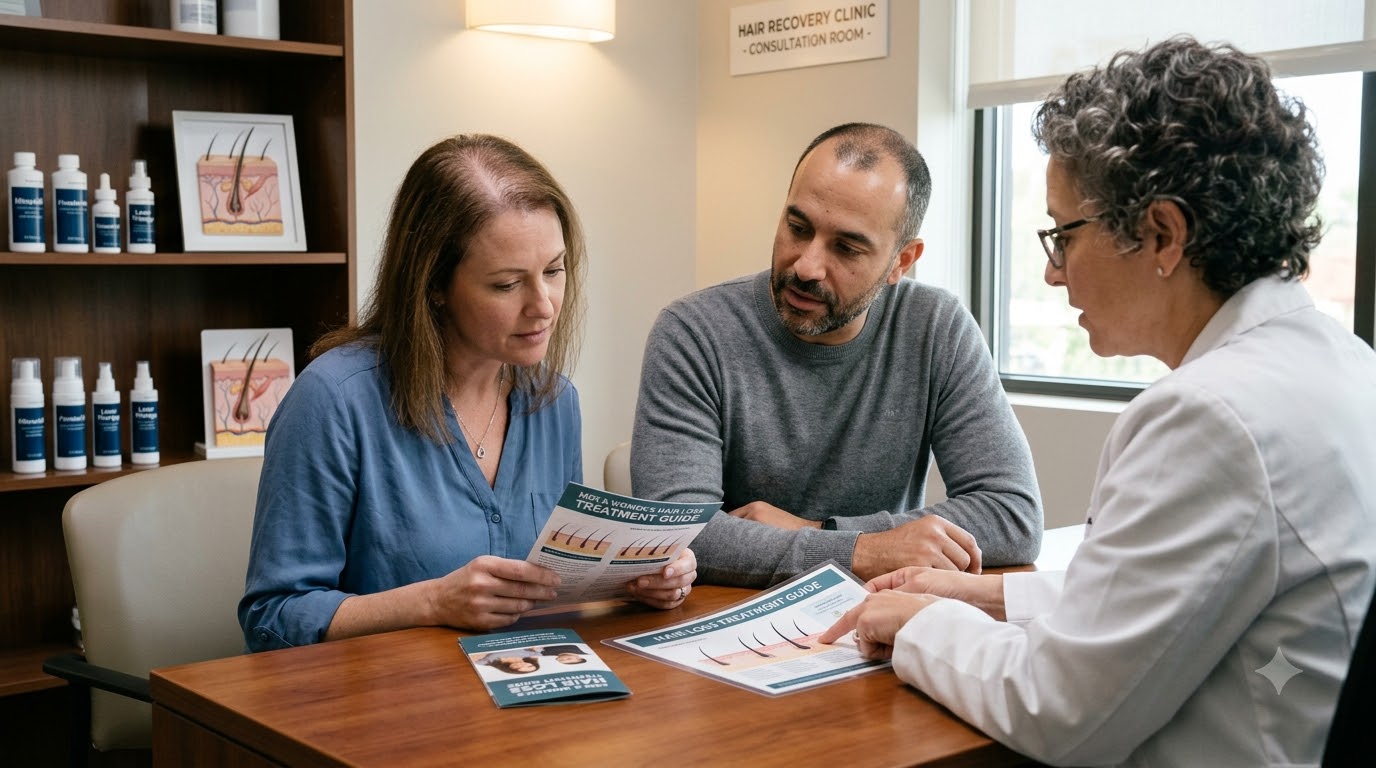

Losing more hair than usual is one of the most common reasons people search for medical answers online, and it affects roughly half of men by age 50 and about 40 percent of women by age 70. This hair loss treatment guide for men and women walks through why hair thins, which medications have real clinical evidence behind them, and which regrowth strategies are worth your time. It also explains where a licensed telehealth provider fits in if you decide medication is the right next step. Green Cap Health, a telehealth practice, treats hair loss alongside weight management, skincare, and sexual health, and its hair regrowth program is the product context we will tie into this guide.
What Causes Hair Loss
Most hair loss falls into one of three buckets: genetic pattern loss, stress-related shedding, or an underlying medical trigger. Androgenetic alopecia, the genetic form, accounts for most cases in both sexes and is driven by sensitivity to DHT at the follicle. Telogen effluvium is a temporary, diffuse shedding pattern triggered by illness, major stress, rapid weight change, or hormonal shifts like postpartum recovery. Less commonly, thyroid disorders, iron deficiency, certain medications, or autoimmune conditions like alopecia areata are behind the change, which is why a proper history matters before starting any treatment.
How to Avoid Hair Fall
You cannot fully prevent genetic pattern hair loss, but you can slow it and protect the follicles you still have. Gentle scalp handling, a diet rich in protein, iron, and zinc, and managing chronic stress can reduce unnecessary shedding on top of genetic loss. Starting a DHT-blocking medication early, before miniaturisation advances, is the single most effective prevention step for pattern hair loss. Avoiding tight hairstyles, harsh chemical treatments, and excessive heat styling also protects against traction-related damage that compounds pattern loss.
What Blocks DHT in Men
Finasteride is the most studied DHT blocker for men, working by inhibiting the 5-alpha reductase enzyme that converts testosterone into DHT at the follicle. Lowering DHT reduces the miniaturization process that shrinks hair follicles over time in androgenetic alopecia, which is why finasteride remains a first-line prescription option. Topical DHT-blocking formulas and certain natural compounds, such as saw palmetto, show milder effects in smaller studies and are sometimes used alongside a prescription rather than instead of one. Results from any DHT blocker take three to six months to become visible because the hair growth cycle itself is slow.
Medications That Actually Regrow Hair
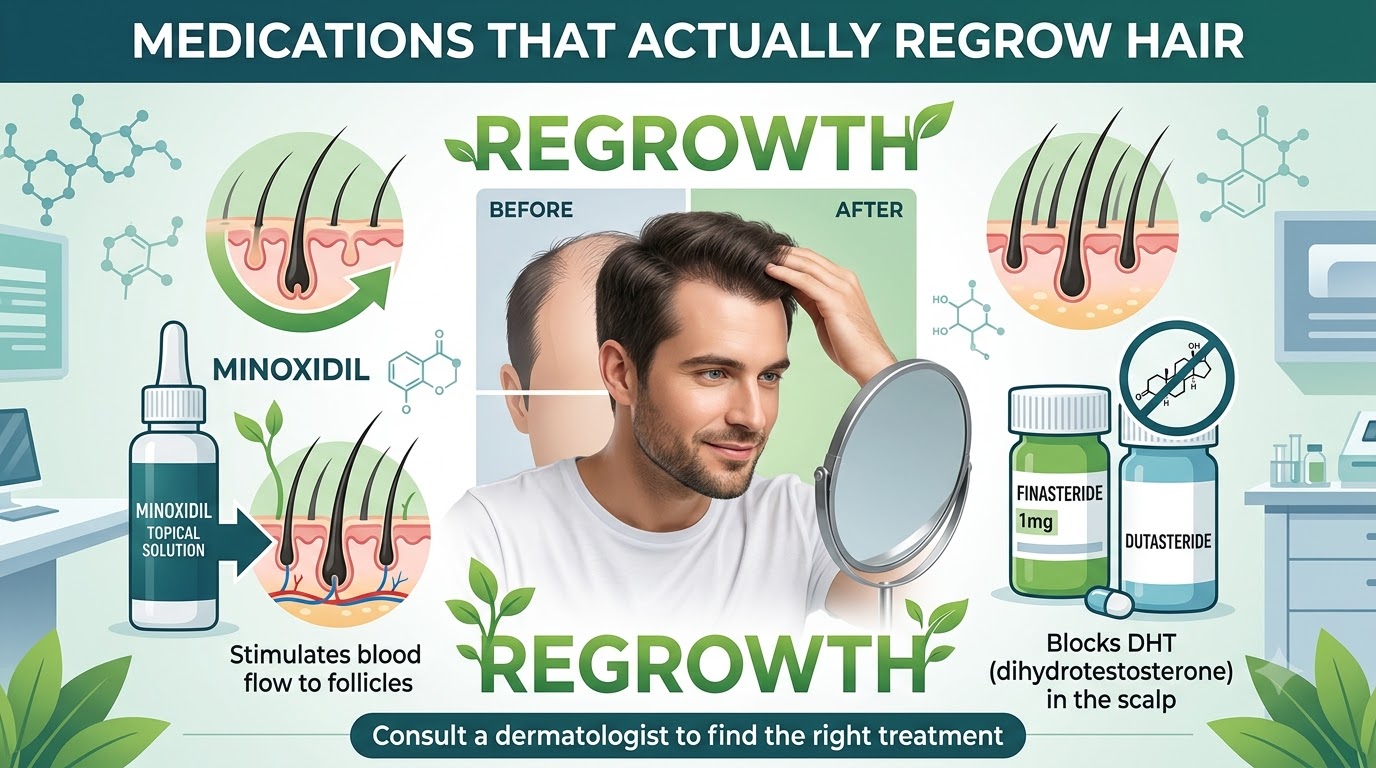
Two medications carry the strongest clinical evidence for hair regrowth: minoxidil and finasteride. Minoxidil, applied topically, widens blood vessels around the follicle and extends the active growth phase of the hair cycle, and it works for both men and women. Finasteride addresses the hormonal driver directly but is prescribed to men only, since it carries risk during pregnancy and is not indicated for women. Spironolactone, an anti-androgen, is sometimes prescribed off-label for women with hormonally driven thinning, and combination regimens that pair an oral medication with a topical one consistently outperform either used alone in published trials.
How to Regrow Hair Naturally
Natural regrowth support works best as a complement to medication, not a replacement, especially once miniaturization has already started. Scalp massage, which may modestly improve circulation, along with adequate sleep, balanced iron and vitamin D levels, and reduced heat styling all support the hair you already have. Peptide-based topicals, including GHK copper peptide, have research showing improved scalp microcirculation and reduced inflammation, making them a reasonable option for people who want a gentler regimen. None of these replaces a diagnosis. If shedding is heavy or sudden, a natural routine alone will not address the underlying driver.
How Female Hair Loss Differs (and How to Accept It)
Female pattern hair loss usually shows up as diffuse thinning across the crown rather than a receding hairline, and it is often tied to hormonal shifts from menopause, postpartum recovery, or thyroid changes rather than DHT alone. Because finasteride is not an option for most women, treatment typically centres on topical minoxidil, addressing any underlying hormonal or nutritional cause, and sometimes spironolactone under medical supervision. Accepting hair loss as a woman does not mean giving up on treatment. It means separating the emotional weight of the change from the medical facts, getting an actual diagnosis instead of guessing, and giving a real treatment plan the three to six months it needs before judging the results. Many women find that having a clear, medically grounded plan reduces the anxiety around hair loss more than any single product does.
How Green Cap Health Helps
Green Cap Health runs a physician-led telehealth program built around exactly this gap between over-the-counter shampoos and a dermatology waitlist. After a short online intake, a licensed U.S. provider reviews your hair loss pattern and history and prescribes from four formats: a once daily 3-in-1 capsule combining a DHT-blocking foundation with supportive nutrients, a 4-in-1 topical serum built around minoxidil, a combo plan pairing both, and a GHK copper peptide foam for people who want a gentler, prescription-strength option. Unlike biotin gummies or scalp tonics sold at cosmetic concentrations, every Green Cap formula is compounded at therapeutic doses in an FDA-registered pharmacy and shipped with ongoing provider check-ins, not a one-time consult and silence.
When to See a Doctor
Sudden patchy bald spots, scalp pain, redness, or scarring warrant an in-person dermatology evaluation rather than a standard hair loss protocol. Heavy shedding that starts abruptly and does not slow within a few months also deserves bloodwork to rule out thyroid or iron issues before assuming it is pattern hair loss. For everyone else, a telehealth intake with a licensed provider is a reasonable first step, since it gets you a real prescription reviewed by a clinician instead of a guess based on internet forums.
FAQ
Q: How to avoid hair fall?
A: You cannot stop genetic pattern hair loss entirely, but gentle hair care, adequate protein and iron intake, lower stress, and starting a DHT-blocking treatment early all slow the rate of shedding significantly.
Q: What blocks DHT in men?
A: Finasteride is the primary prescription option; it inhibits the enzyme that converts testosterone into DHT at the follicle. Some topical formulas and saw palmetto offer milder DHT-blocking support.
Q: How to regrow hair naturally?
A: Scalp massage, better sleep, balanced iron and vitamin D, and peptide-based topicals like GHK copper peptide support regrowth, but they work best alongside, not instead of, a medical treatment plan.
Q: How to accept female hair loss?
A: Start with an actual diagnosis rather than guesswork, separate the emotional impact from the medical facts, and give a real treatment plan three to six months before judging results. A clear plan usually reduces anxiety more than any single product.
Q: Is hair loss treatment different for men and women?
A: Yes. Men typically use finasteride plus minoxidil for genetic pattern loss, while women rely on topical minoxidil and sometimes spironolactone, since finasteride is not recommended for most women.
Q: Do I need a prescription for hair regrowth treatment?
A: Effective ingredients like minoxidil at higher concentrations and finasteride require a prescription. Over-the-counter products at cosmetic strength are not enough to meaningfully change the hair growth cycle for most people with pattern loss.
Advance Your Longevity Journey
Our clinical team provides personalized senolytic assessments based on the latest research protocols.