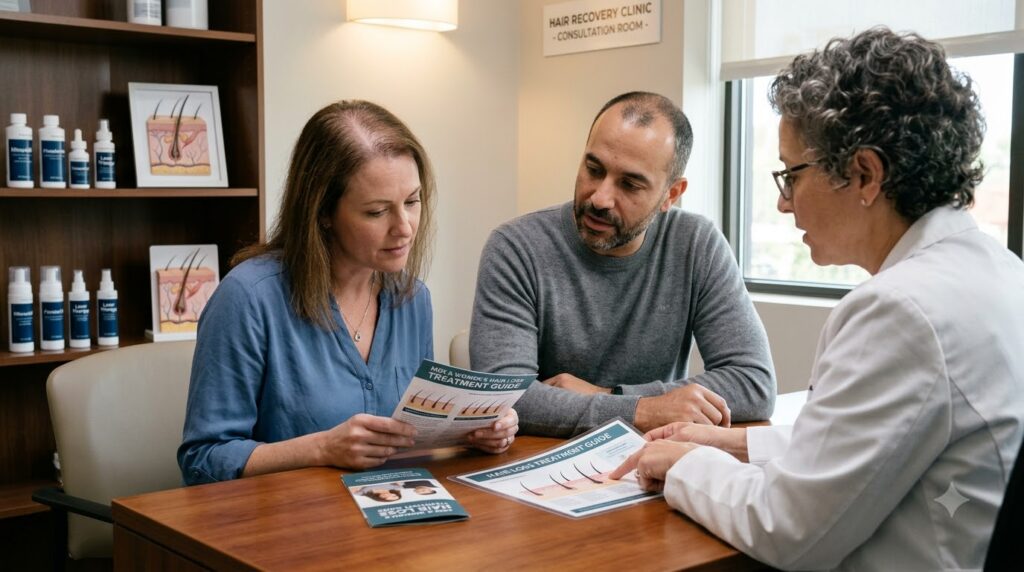


The most effective hair loss treatments do one of two things. Some block DHT, the hormone that shrinks hair follicles. Others wake up follicles that have gone quiet. For men, that usually means finasteride, minoxidil, or both. For women, the core option is minoxidil, sometimes paired with an anti-androgen like spironolactone. Whatever you choose, plan on at least three to six months before you judge the results.
Green Cap Health is a licensed U.S. telehealth practice that treats hair loss, weight, skin, and sexual health for adults without insurance. Its hair regrowth program offers four prescription options:
- Oral DHT-blocking capsules
- A minoxidil-based serum
- A capsule and serum combo
- A finasteride-free copper peptide foam
A licensed provider reviews your health information to determine whether treatment is appropriate and which option fits your needs.
What Causes Hair Loss in Men and Women?
The most common cause in both sexes is androgenetic alopecia, better known as male or female pattern hair loss. It’s genetic and driven by sensitivity to DHT. Other causes include:
- Stress-related shedding (telogen effluvium)
- Thyroid problems
- Iron deficiency
- Hormonal shifts after pregnancy or menopause
- Rapid weight loss
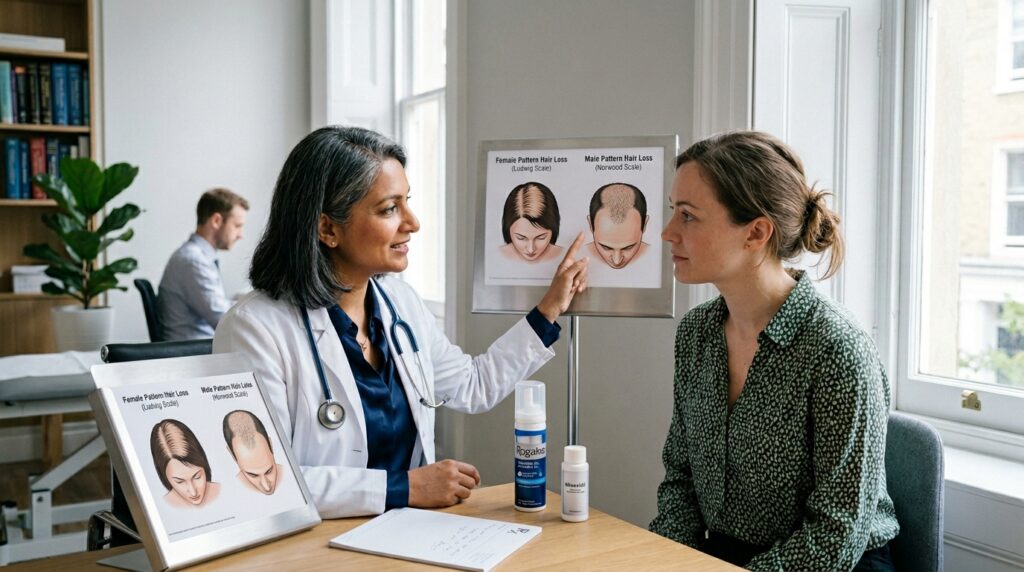
The pattern gives the first clue. Men tend to lose hair at the temples and crown. Women usually see a widening part while the hairline stays put. Sudden, diffuse shedding is a different problem, and it often resolves once you fix the trigger.
What Are the Most Effective Hair Loss Treatments?
The strongest evidence supports two drugs:
- Minoxidil, which is FDA-approved for both men and women.
- Finasteride, which is FDA-approved for men only.
Several other options are used widely by dermatologists, though they are not FDA-approved for hair loss:
- Oral minoxidil
- Spironolactone for women
- Dutasteride
Here’s how the main options compare:
Topical minoxidil | Extends the growth phase, boosts blood flow | Men and women | 3 to 6 months |
Finasteride (oral) | Lowers DHT by about two-thirds | Men | 3 to 6 months |
Spironolactone | Blocks androgen effects | Women | 6 months |
Copper peptide (GHK-Cu) | Supports follicle and scalp health | Sensitive scalps, finasteride avoiders | 3 to 6 months |
PRP / transplant | Growth factors/moves follicles | Advanced loss | Varies |
Best Hair Loss Treatment for Men
For male pattern hair loss, finasteride plus minoxidil is the standard starting point. Finasteride stops the hormonal damage, and minoxidil encourages regrowth. In trials, most men on finasteride kept their hair stable, and many regained some density.
Side effects are uncommon but real. A small share of men report lower libido. A provider should go over this risk with you before you start.
Best Hair Loss Treatment for Women
For women, topical minoxidil is the first-line treatment. Spironolactone is often added when hormones play a role, as with PCOS or loss around menopause.
Finasteride is generally avoided in women who could become pregnant, because it can affect a male fetus. Women also often benefit from blood work. Low iron or a thyroid problem can quietly cause thinning that no topical treatment will fix.
Do Oral and Topical Hair Regrowth Treatments Work Better Together?
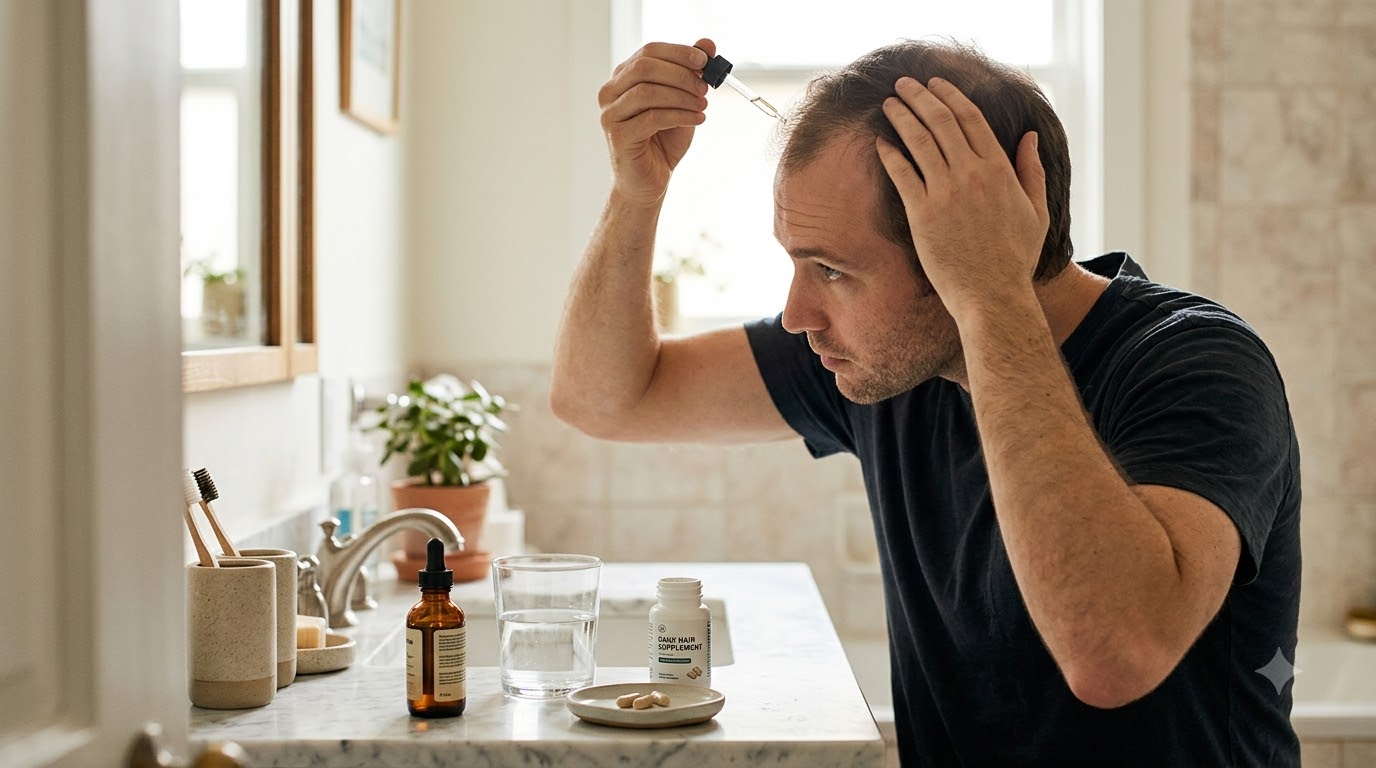
Usually, yes. An oral DHT blocker works on the hormonal cause from the inside, while a topical treatment stimulates the follicle at the scalp. Because they work on two separate mechanisms, the combination tends to outperform either one alone.
That is why Green Cap’s most popular hair plan pairs the 3-in-1 Hair Growth Capsules with the 4-in-1 Advanced Rx Hair Growth Serum, treating both internal and scalp-level causes together. Patients who can’t or won’t take finasteride often use the GHK Copper Peptide Hair Growth Foam, a gentler peptide-based option.
How Long Does Hair Loss Treatment Take to Work?
Expect three to six months before you see visible change, and about a year to see the full effect. Hair grows slowly, and the follicles need time to cycle.
The first few weeks can be unnerving. Minoxidil often causes a temporary increase in shedding, usually starting between week two and week eight. That shedding signals weaker hairs are making way for stronger ones, so don’t stop treatment.
To track progress honestly, take photos in the same light every month. The mirror alone tends to mislead.
When to See a Doctor About Hair Loss
See a provider if any of these apply:
- The loss is sudden or patchy.
- It comes with itching, pain, or scarring.
- It follows a new medication, an illness, or childbirth.
A licensed provider can also save you months of trial and error by pointing you to the right treatment from the start.
Green Cap’s process is built around that evaluation:
- You place your order.
- You complete the required intake and medical history information, including your hair loss pattern, health history, and any treatments you’ve already tried.
- A licensed provider reviews this information to determine whether treatment is appropriate for you.
- If it is, a licensed pharmacy prepares your prescription and ships it to you.
The Bottom Line
No single hair regrowth treatment works for everyone, and that’s why you get evaluated. Men with early thinning usually respond best to a DHT blocker paired with minoxidil. Women do best when you check hormones and nutrition first. Starting early matters more than anything else, because a follicle that’s still alive is far easier to save than one that has already shut down.
FAQs
Q: What is the best hair loss treatment for men?
A: Finasteride combined with minoxidil is the most proven option for male pattern hair loss.
Q: What is the best hair loss treatment for women?
A: Topical minoxidil is first-line. Spironolactone is often added when hormones are involved.
Q: How long do hair regrowth treatments take to work?
A: Visible results take 3 to 6 months, and full results take about 12 months.
Q: Why is my hair shedding more after starting minoxidil?
A: Temporary shedding in the first few weeks is normal and usually means the growth cycle is resetting.
Q: Can women take finasteride?
A: It’s generally avoided in women who could become pregnant. A provider decides case by case.
Q: Do I need a prescription for hair loss treatment?
A: Yes, for finasteride, spironolactone, and prescription-strength blends. Lower-strength minoxidil is sold over the counter.
Advance Your Longevity Journey
Our clinical team provides personalized senolytic assessments based on the latest research protocols.