

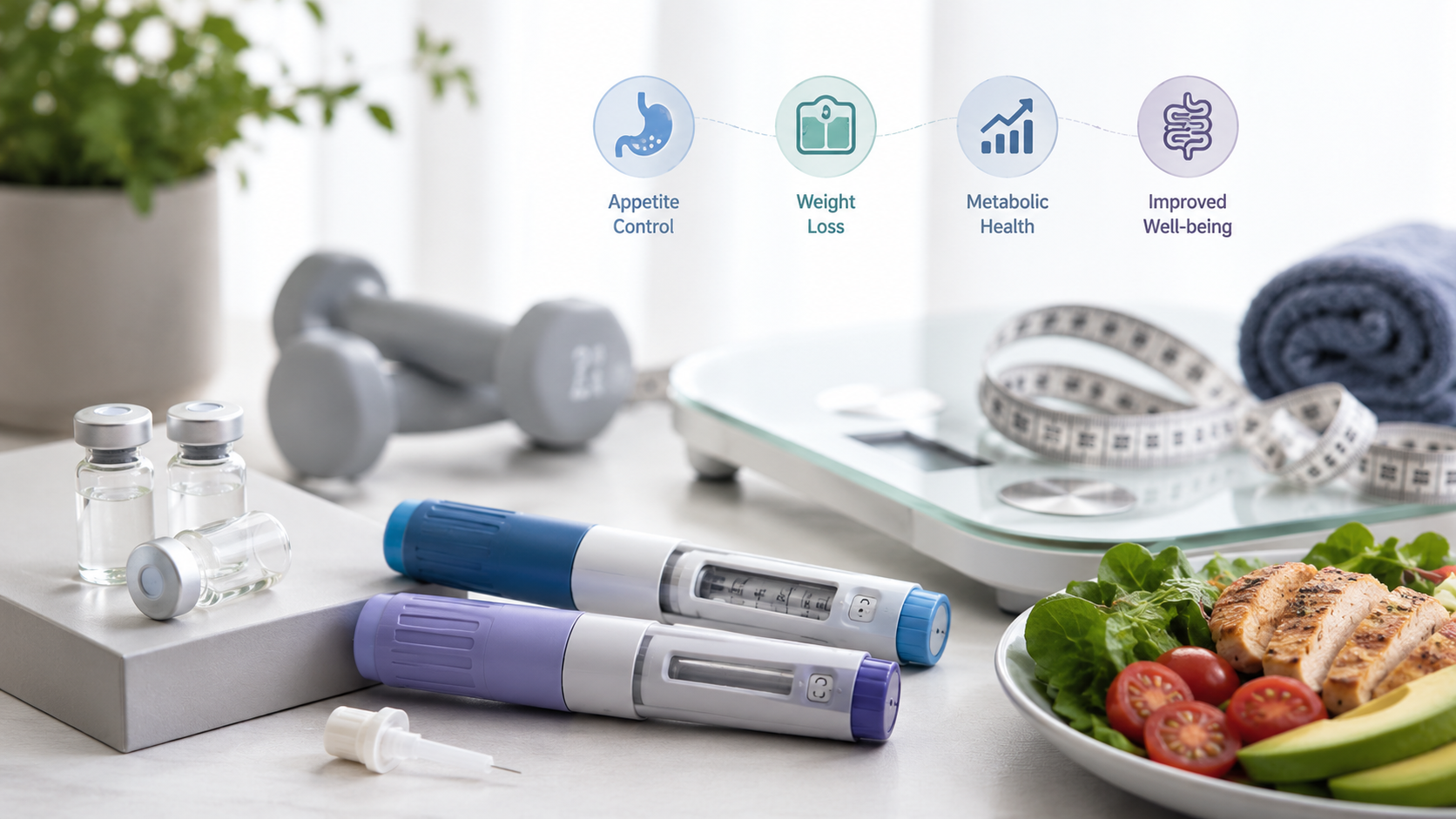
GLP-1 weight loss injections have become one of the most talked-about tools in modern weight management, and for good reason: clinical trials consistently show meaningful, sustained weight loss for people who use them correctly. If you have heard the names semaglutide and tirzepatide but are not sure what they actually do, how they differ, or what starting treatment really involves, this guide walks through the full picture in plain terms.
What Are GLP-1 Weight Loss Injections
GLP-1 weight loss injections are prescription medications that mimic a natural gut hormone to reduce appetite and slow digestion, leading to lower calorie intake and gradual weight loss. They are administered as a once-weekly injection and are prescribed alongside lifestyle changes rather than as a standalone fix.
The category includes semaglutide, tirzepatide, and newer dual-action GLP-1/GIP formulations. All of them require a prescription and provider oversight because dosing is gradual and side effects need to be monitored, especially in the first few months.
How GLP-1 Injections Work in the Body
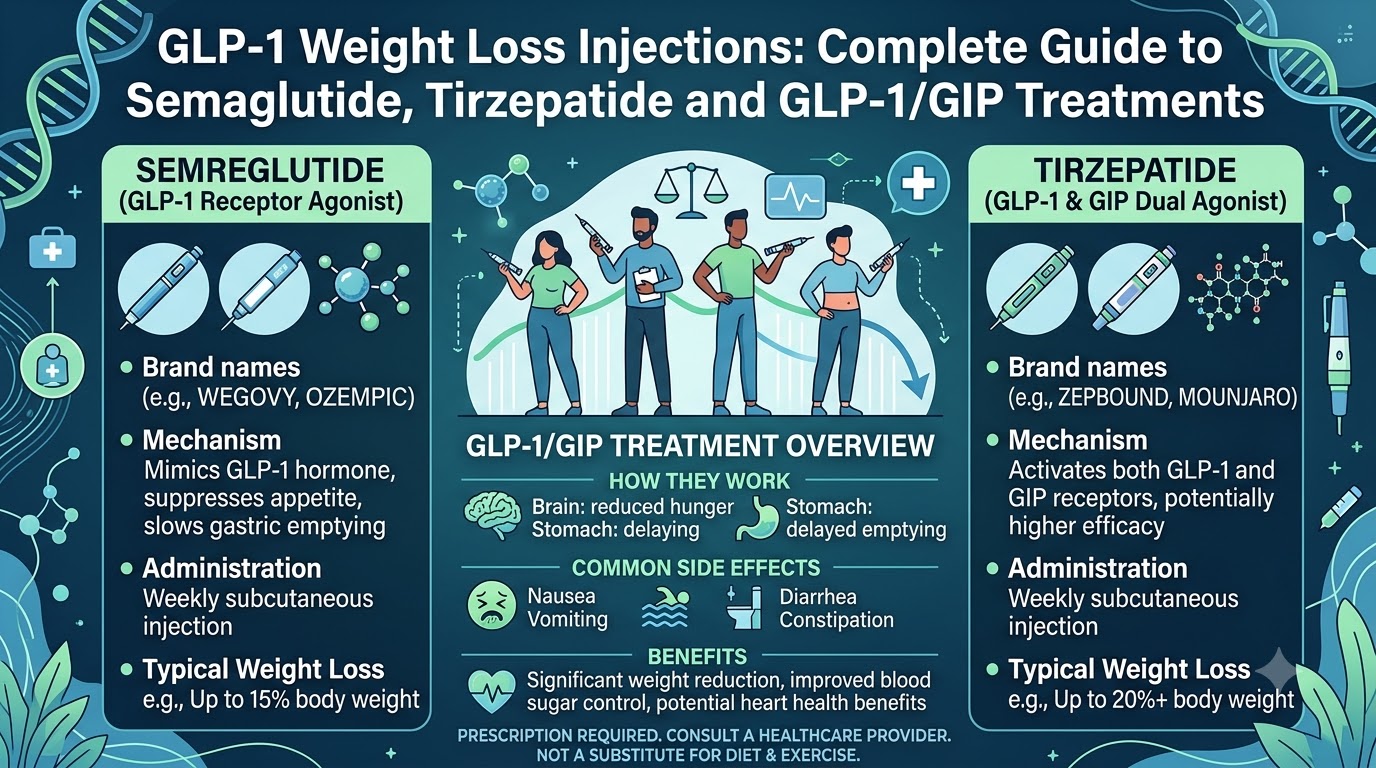
GLP-1 injections work by copying a hormone your gut already releases after eating, which signals your brain that you are full and slows how quickly your stomach empties. That combination is what reduces hunger and portion sizes without requiring constant willpower against cravings.
The hormone glucagon-like peptide 1 also plays a role in regulating blood sugar, which is why this drug class was originally developed for type 2 diabetes before its weight loss effects were studied on their own. A provider adjusts your dose slowly over several weeks to let your digestive system adapt and limit nausea, the most common early side effect.
Semaglutide vs Tirzepatide, in Short
Semaglutide and tirzepatide both belong to the GLP-1 class, but tirzepatide also activates a second hormone receptor, GIP, which appears to produce somewhat greater average weight loss in clinical studies. Semaglutide has a longer track record and is often the starting point for patients newer to this category of treatment.
Choosing between them depends on your health history, prior response to medication, and how your provider wants to approach dosing. For a full side-by-side breakdown of dosing, results, and cost, see our dedicated comparison guide on semaglutide versus tirzepatide for Texas patients.
What Makes GLP-1/GIP Treatment Different
A GLP-1/GIP treatment targets two hormone pathways instead of one, which is why tirzepatide and similar dual-action medications often show stronger appetite suppression than GLP-1-only options. The GIP component appears to improve how the body uses insulin and may enhance the metabolic benefits alongside appetite reduction.
In practice, this means dual-action treatment can be a reasonable option for patients who have plateaued on a GLP-1-only medication or who are looking for the strongest available option from the start, always in coordination with a provider familiar with your health history.
How Effective Are These Injections
Clinical trial data shows average weight loss in the range of 15 to 20 percent of body weight over roughly a year for tirzepatide, and somewhat lower, though still substantial, average losses for semaglutide. Real-world results vary based on dose, consistency, diet, and individual response.
Effectiveness also depends heavily on sticking with the gradual dose increase schedule and pairing treatment with basic nutrition changes rather than expecting the medication to work in isolation. Providers typically track progress monthly and adjust the plan if weight loss stalls.
Common Side Effects to Expect
The most common side effects are gastrointestinal: nausea, mild constipation or diarrhoea, and occasional reflux, especially during the first few weeks or after a dose increase. These effects are usually manageable and tend to fade as the body adjusts.
Less common but more serious risks include gallbladder issues and, rarely, pancreatitis, which is why an initial health screening and ongoing provider check-ins matter more with this medication class than with a typical short-term prescription. Anyone with a personal or family history of certain thyroid conditions should discuss that history with their provider before starting.
How Long Until You See Results
Most patients notice reduced appetite within the first one to two weeks, with measurable weight loss typically becoming apparent around the one-month mark and continuing steadily over three to six months. Full results generally build over 6 to 12 months as the dose is gradually increased.
This gradual timeline is intentional. Slower titration reduces side effects and allows the body to adjust, which is part of why ongoing provider support during the early months tends to produce better long-term outcomes than trying to rush the dosing schedule.
How to Get a GLP-1 Prescription
Getting a GLP-1 prescription starts with a health assessment and a review by a licensed provider who confirms the medication is appropriate for your history and goals, whether through an in-person clinic or a telehealth platform. No insurance is required to start this process through a cash-pay telehealth provider.
Green Cap Health is a licensed Texas telehealth practice built around exactly this pathway. Patients complete an online health assessment, meet with a licensed Texas provider, and if approved, receive semaglutide or GLP-1/GIP medication shipped directly from a state-licensed pharmacy partner, with plans starting around $79 for the first month and ongoing cost varying by medication, dose, and term. Every plan includes provider oversight through the dose titration period rather than a one-time script, along with the option to add lab work and monthly check-ins for patients who want closer monitoring during their first months of treatment. A free consultation is available for anyone who wants to ask questions before committing to a plan.
GLP-1 weight-loss injections are not a shortcut, but for the right candidate, under real provider supervision, they are among the most effective medical tools currently available for sustained weight loss.
FAQ Section
Q: What are GLP-1 weight loss injections?
A: They are prescription medications that mimic a gut hormone to reduce appetite and slow digestion, given as a weekly injection alongside lifestyle changes.
Q: How do GLP-1 weight loss injections work?
A: They copy the hormone GLP-1, which signals fullness to the brain and slows stomach emptying, reducing hunger and calorie intake over time.
Q: What is the difference between semaglutide and tirzepatide?
A: Tirzepatide also activates the GIP receptor alongside GLP-1, which tends to produce somewhat greater average weight loss than semaglutide alone in clinical studies.
Q: How effective are GLP-1 weight loss injections?
A: Clinical trials show average weight loss of roughly 15 to 20 percent of body weight over about a year for tirzepatide, with somewhat lower but still meaningful results for semaglutide.

Advance Your Longevity Journey
Our clinical team provides personalized senolytic assessments based on the latest research protocols.