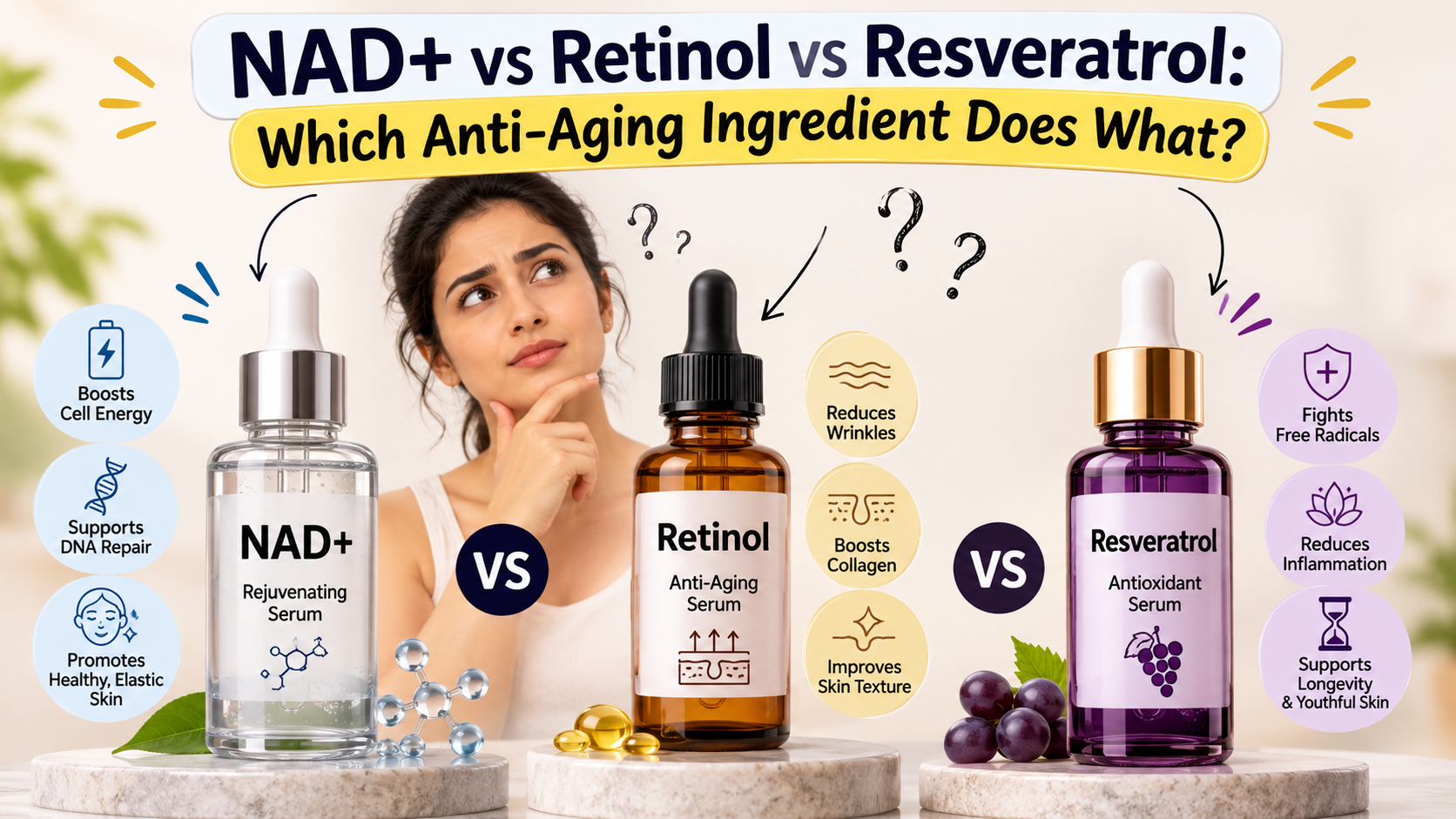

NAD+ vs retinol vs resveratrol comes down to three different jobs. Retinol speeds up cell turnover and stimulates collagen, resveratrol is an antioxidant that protects skin from damage, and NAD+ supports cell energy and repair. Retinol has the strongest evidence for visible aging, resveratrol has promising but smaller human data, and topical NAD+ is the least proven.
Green Cap Health is a licensed U.S. telehealth practice. It serves adults who want physician-led skincare, weight loss, hair regrowth, and sexual health care without insurance or waiting rooms. Here is what each ingredient can realistically do for your skin.
What does retinol do for skin?
Retinol is a vitamin A derivative that speeds cell turnover and encourages collagen, which smooths texture and softens fine lines. It is also the best studied of the three. Retinoids have much stronger evidence for improving visible signs of skin ageing than NAD+ does.
The tradeoff is irritation. Retinol can cause dryness and irritation, especially for beginners. Over-the-counter retinol is also a milder form. Tretinoin, its prescription cousin, is already in the active acid form, so skin doesn’t have to convert it first.
What does resveratrol do for skin?
Resveratrol is a plant polyphenol found in grapes and berries. It works mainly as an antioxidant, helping skin handle damage from sun and pollution. Think protection and maintenance rather than repair.
Human evidence exists but is smaller than the buzz suggests. Resveratrol has a large body of laboratory and animal research, but far fewer human studies on visible aging. One 2025 trial found lower wrinkle scores after eight weeks, but the clearest gain came from combining oral and topical use. Topical resveratrol alone did not significantly improve most measured outcomes.
What does NAD+ do, and does it work?
NAD+ is a coenzyme cells use for energy and repair, and levels in skin appear to decline with age. That makes it a logical target. The catch is delivery. It remains unclear whether topical NAD+ in ordinary creams penetrates skin enough to make a meaningful difference.
Many “NAD+” products actually rely on smaller precursors such as niacinamide. For the full evidence review, see our NAD+ skincare guide.
NAD+ vs retinol vs resveratrol: which has the strongest evidence?
Retinol wins on proof, resveratrol sits in the middle, and NAD+ trails. Here is the short version.
Ingredient | Main job | Human evidence | Irritation risk |
Retinol/tretinoin | Speeds turnover, builds collagen | Strongest | Higher |
Resveratrol | Antioxidant protection | Moderate, growing | Low |
NAD | Cell energy and repair | Limited | Low |
Can you use them together?
Usually yes, and the combination makes sense because each does a different job. A common pattern is resveratrol in the morning under sunscreen, retinol at night, and a niacinamide or NAD+ product whenever it fits.
Add one product at a time and give each a couple of weeks. Start retinol two nights a week, then build up. Wear sunscreen daily, since retinoids can increase sun sensitivity. Retinoids are not for use in pregnancy, so tell your provider if you are pregnant or trying.
Which is gentlest for sensitive skin?
Resveratrol- and niacinamide-based products tend to be the gentlest. Resveratrol is generally considered gentle and suited to sensitive skin. If you want a retinoid anyway, a provider can help you pick a strength and schedule that your skin can tolerate.
How Green Cap Health fits in
If your goal is visible lines and texture, retinoids are the ingredient with the most evidence behind them. Our Acne Clearing Cream includes tretinoin alongside clindamycin and niacinamide in one prescription-strength formula at $69.99 a month. It is formulated for acne, so a provider decides whether a retinoid-based plan also fits your ageing concerns.
A free consultation through our skincare treatment program is a simple way to compare options before buying anything. You can also read the formula details for the Acne Clearing Cream or our guide to prescription acne creams. Compounded medications are not FDA-approved, and prescriptions are issued only when clinically appropriate.
Which should you start with?
Match the ingredient to your goal, and put sunscreen first.
Fine lines and rough texture: retinol, or tretinoin if you want a prescription option.
Sun damage protection and sensitive skin: resveratrol in your morning routine.
Curiosity or an extra layer: a NAD+ or niacinamide product, kept in perspective.
If you can only afford one step beyond sunscreen, the evidence points to a retinoid.
FAQ
Q: What is the difference between NAD+, retinol, and resveratrol?
A: Retinol speeds turnover and builds collagen, resveratrol protects as an antioxidant, and NAD+ supports cell energy and repair.
Q: Which has the strongest evidence for aging skin?
A: Retinol and prescription retinoids such as tretinoin.
Q: Does resveratrol work as well as retinol?
A: No. Resveratrol has promising but smaller human data and works differently.
Q: Does topical NAD+ work for skin?
A: Unproven. It is unclear whether NAD+ in ordinary creams penetrates the skin meaningfully.
Q: Can you use NAD+, retinol, and resveratrol together?
A: Usually, if you add them one at a time and wear sunscreen daily.
Q: Which is best for sensitive skin?
A: Resveratrol- and niacinamide-based products are typically gentler than retinol.
Advance Your Longevity Journey
Our clinical team provides personalized senolytic assessments based on the latest research protocols.