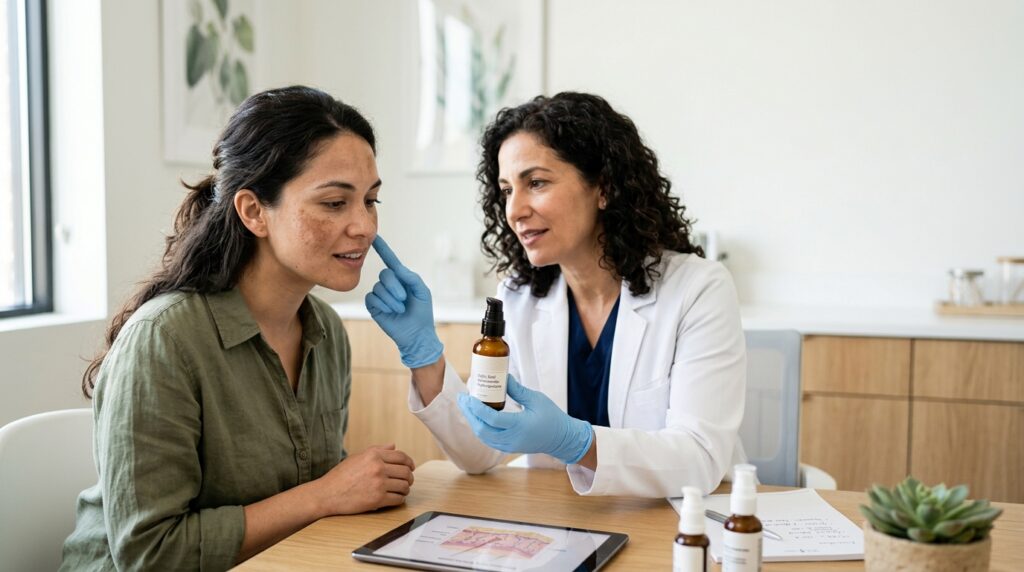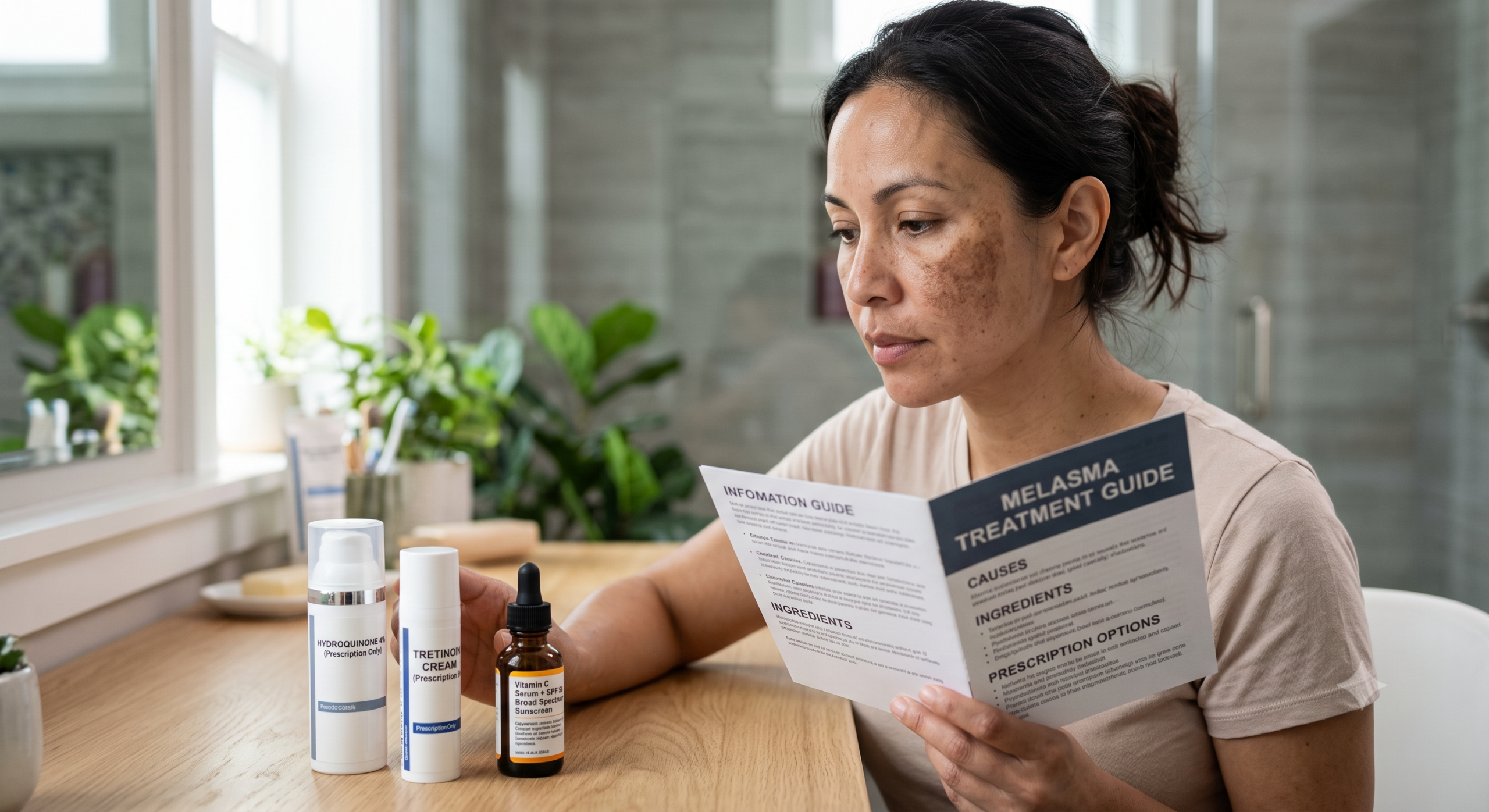

Melasma appears as brown or grey patches, usually on the cheeks, forehead, or upper lip, and affects an estimated one in eight adults, most often women. This melasma treatment guide explains why the condition develops, which treatment categories make a real difference, and how long results realistically take. It also explains where a prescription fade cream fits when daily sunscreen and over-the-counter brighteners aren’t enough on their own. Green Cap Health, a Texas telehealth practice, treats melasma and other hyperpigmentation with a compounded fade cream alongside its weight loss, hair regrowth, and sexual health programs, and we’ll tie that product into this guide.
What Causes Melasma
Melasma develops when melanocytes, the skin’s pigment-producing cells, become overactive and release excess pigment in response to specific triggers. Ultraviolet exposure is the most consistent trigger, since even brief unprotected sun exposure can reactivate patches that were fading, and visible light from screens and windows can play a role too, not just direct sunlight. Hormonal shifts from pregnancy, birth control, or hormone therapy are the second major driver, which is why melasma is sometimes called the mask of pregnancy. Genetics and skin tone also play a role, with melasma appearing more frequently in people with medium to deep skin tones and a family history of the condition; heat itself, separate from UV exposure, also appears to worsen existing patches in some people.
What Is the Best Treatment for Melasma
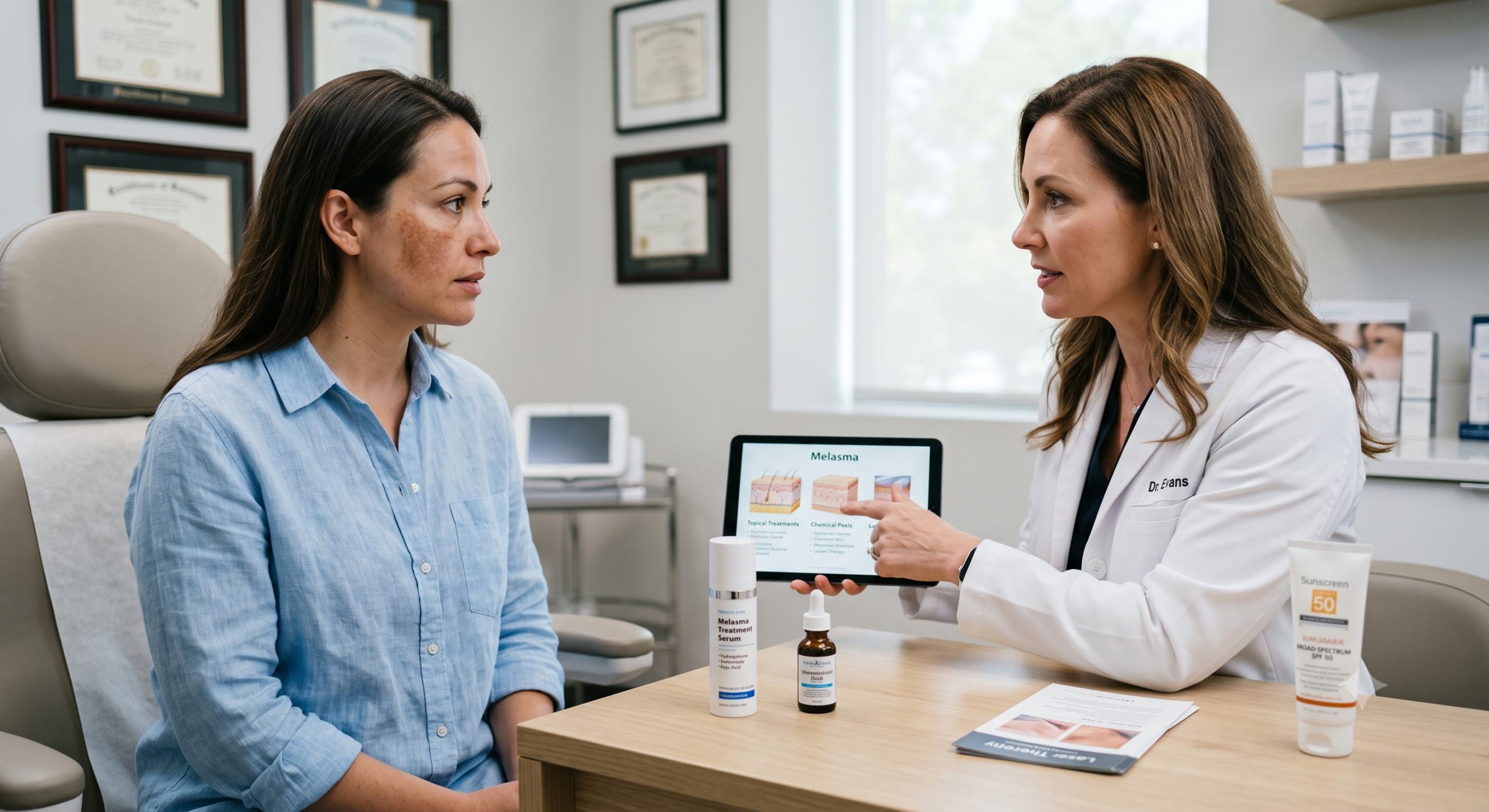
The best treatment for melasma isn’t a single product but a layered approach: daily broad-spectrum sunscreen as the non-negotiable foundation, paired with a targeted brightening or prescription cream. Sunscreen alone will not erase existing patches, but skipping it undoes progress from every other treatment, which is why dermatologists consider it step one rather than an optional add-on. Physical sunscreens containing zinc oxide or titanium dioxide are often recommended over chemical filters for melasma, since they also block some visible light that chemical filters do not address. For most people, a provider-reviewed combination cream, used consistently and paired with daily sun protection, is a more realistic best option than any single ingredient marketed as a standalone cure.
What Is the Most Effective Treatment for Melasma
Clinical research consistently points to combination therapy as the most effective approach, typically pairing hydroquinone with a retinoid and sometimes a mild corticosteroid, a formula often referred to as triple combination therapy. Tranexamic acid, taken orally or applied topically, has also shown strong results in more recent studies, particularly for stubborn or recurrent cases that have not responded well to hydroquinone alone. Procedural options like chemical peels or certain laser treatments can help in dermatology offices. Still, they carry a real risk of worsening melasma if used incorrectly, since heat and irritation are both known triggers. Single-ingredient treatments can help mild melasma, but the evidence base is strongest for combination regimens prescribed and monitored by a provider rather than assembled piecemeal from drugstore shelves.
The Fastest Way to Treat Melasma
There is no overnight fix for melasma, since it involves pigment sitting deep in the skin that takes weeks to clear even with the right products. The fastest realistic path combines strict daily sun protection with a prescription-strength combination cream started as early as possible, since melasma responds better before patches have been present for years. Most people see visible fading within eight to twelve weeks of consistent use, with continued improvement over four to six months, and skipping applications or sun protection is the most common reason progress stalls. Reapplying sunscreen midday, not just once in the morning, makes a meaningful difference for people who spend real time outdoors, since a single application rarely lasts a full Texas summer day.
Can Melasma Be Removed Permanently
Melasma can fade dramatically and, for many people, become essentially invisible with consistent treatment, but it’s usually managed rather than permanently cured. Because the underlying melanocytes remain sensitive to triggers like sun exposure and hormonal shifts, patches can return years later even after clearing completely, sometimes triggered by a single unprotected summer or a new pregnancy. Ongoing sun protection after active treatment keeps melasma from resurfacing, which is why dermatologists frame long-term success as maintenance rather than a one-time fix. People who stop all treatment and sun protection the moment patches fade are the most likely to see melasma return within a year.
Ingredients Behind Melasma Treatment
Hydroquinone remains the most studied ingredient for melasma, working by slowing the enzyme that produces pigment. However, it requires provider guidance around strength and duration of use since prolonged unsupervised use carries its own risks. Niacinamide and kojic acid offer gentler pigment-reducing effects. They are often used alongside stronger actives to support the skin barrier during treatment, which matters because irritation itself can worsen melasma in a frustrating cycle. Azelaic acid is another option some providers reach for, particularly for people who are pregnant or breastfeeding and cannot use hydroquinone or tretinoin. For a full breakdown of how these ingredients work together in a compounded formula, our dedicated ingredient guide covers hydroquinone, niacinamide, and kojic acid in more depth.
How Green Cap Health Helps
Green Cap Health offers a compounded melasma fade cream reviewed by a licensed Texas provider before it ships, built around the same evidence-backed actives dermatologists reach for rather than a one-size-fits-all tube from a drugstore shelf. After a short online intake covering your skin history, trigger pattern, and how long the patches have been present, a provider confirms whether a combination formula fits your case and adjusts it if progress stalls. This matters because effective melasma treatment usually needs stronger, provider-guided concentrations than cosmetic-strength products offer, and Green Cap compounds its formulas at therapeutic doses in an FDA-registered pharmacy rather than shipping a generic strength meant for the widest possible audience. Patients get the same ongoing check-ins the platform uses across its other programs, so a regimen that stops working gets revisited quickly instead of quietly abandoned after a few frustrating months, and questions about sun protection or pregnancy-safe alternatives get answered by an actual provider rather than a product label.
When Melasma Needs Professional Treatment
Patches that keep spreading, don’t respond to eight to twelve weeks of consistent treatment, or show up alongside other skin changes warrant a dermatology-level evaluation to rule out other causes of pigmentation. Melasma that developed during pregnancy sometimes fades on its own after delivery, so many providers recommend waiting a few months postpartum before starting active treatment, especially since some ingredients are not appropriate during pregnancy or breastfeeding. For most other cases, a telehealth intake with a licensed provider is a reasonable starting point, since it gets you a real prescription regimen instead of another round of trial and error with over-the-counter fade creams.
FAQ
Q: What is the best treatment for melasma?
A: The best treatment layers daily broad-spectrum sunscreen with a targeted brightening or prescription cream. Sunscreen alone will not clear existing patches, but skipping it undoes progress from every other treatment.
Q: What is the most effective treatment for melasma?
A: Combination therapy, typically hydroquinone paired with a retinoid and sometimes a mild corticosteroid, has the strongest clinical evidence. Tranexamic acid has also shown strong results in recent studies.
Q: What is the fastest way to treat melasma?
A: Strict daily sun protection, combined with a prescription-strength combination cream started early, gives the fastest realistic results. Most people see visible fading within eight to twelve weeks of consistent use.
Q: Can melasma be removed permanently?
A: Melasma can fade dramatically and often become nearly invisible, but it is typically managed rather than permanently cured, since the underlying pigment cells remain sensitive to triggers like sun exposure.
Q: What causes melasma?
A: Melasma develops when overactive pigment cells respond to triggers like UV exposure and hormonal shifts from pregnancy or birth control, with genetics and skin tone also playing a role.
Q: Do I need a prescription for melasma treatment?
A: Stronger actives like hydroquinone at effective concentrations typically require provider guidance. Over-the-counter products can help mild cases but often aren’t enough for moderate to severe melasma.
Advance Your Longevity Journey
Our clinical team provides personalized senolytic assessments based on the latest research protocols.