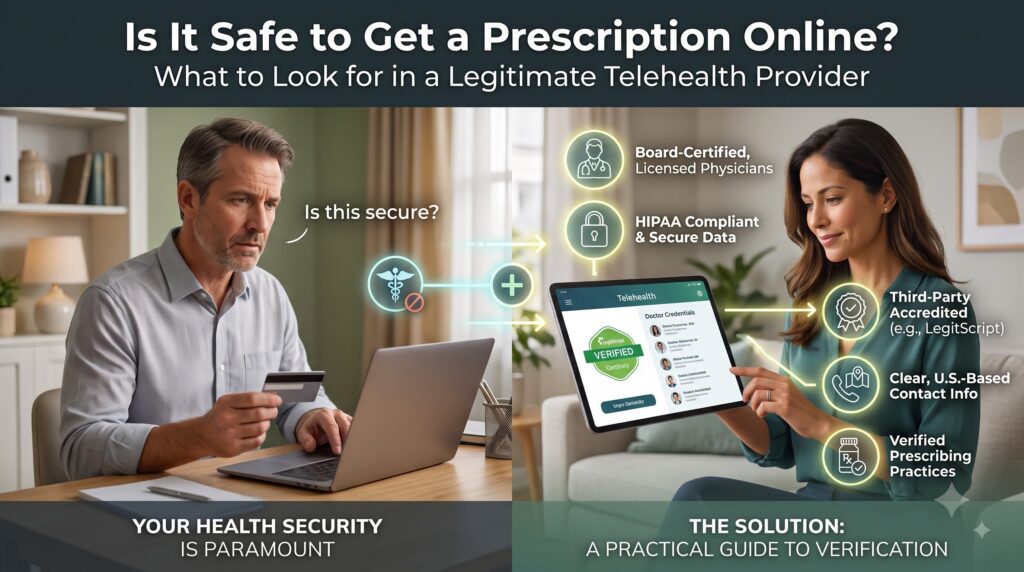


Getting prescription treatment without insurance is more realistic today than most people assume. Telehealth platforms now connect Texans directly with licensed providers who can evaluate, prescribe, and ship medication without a traditional insurance plan. If you have ever put off treatment because you assumed you needed coverage first, this guide breaks down exactly how the process works, what it costs, and where to start.
How Prescription Treatment Without Insurance Actually Works
You do not need insurance to see a licensed provider or fill a prescription. Most online clinics use a cash-pay model: you pay a flat fee for the consultation and, if approved, for the medication itself, instead of billing an insurance company.
The process usually looks the same across platforms. You complete a short health questionnaire online, a licensed provider such as a doctor or nurse practitioner reviews your history, and if the treatment is appropriate, they write the prescription. A state-licensed pharmacy then fills it and ships it to your door. There is no waiting room, no referral, and no insurance card required at any step.
Is It Legal and Safe to Get Prescriptions Online
Yes, as long as the platform uses licensed providers and licensed pharmacies in your state. Texas allows telehealth prescribing for a wide range of conditions, and the same medical standards apply whether you are seen in person or on a video call.
The safety of the process comes down to who is behind it. A legitimate telehealth provider will require a real health assessment, not just a checkbox form, and will only prescribe when it is clinically appropriate. Look for providers who disclose their state licensing, use secure and HIPAA-compliant platforms, and route your prescription through an actual pharmacy rather than an unregulated overseas supplier.
What It Costs Without Insurance
Without insurance, you are paying directly for the provider visit and the medication. Still, that total is often lower than people expect, especially compared to an uninsured urgent care or specialist visit. Many telehealth platforms charge a flat consultation fee, sometimes free as part of a treatment plan, plus a monthly cost for the medication itself.
Pricing varies by treatment category. Simple prescriptions like generic sildenafil often run under $50 a month, while prescription-strength topical skincare typically falls closer to the $60 to $100 a month range depending on the formulation. Weight loss injections, which require more clinical oversight and higher-cost ingredients, typically start closer to $80 to $200 a month, depending on the medication and plan length. Membership-style plans that include ongoing provider check-ins usually cost more per month than a single one-time consultation, but they add follow-up support that a one-off visit will not.
Which Treatments Are Available This Way
Telehealth without insurance covers far more than one type of prescription. In Texas, this model is commonly used for weight loss medication, hair regrowth treatments, sexual health prescriptions, and prescription-strength skincare.
Weight Loss Treatment as the Clearest Example
Weight loss is where this access model matters most, because GLP-1 medications like semaglutide and tirzepatide are expensive and frequently denied or limited by insurance plans, even for patients who medically qualify. Through a telehealth provider, patients can complete labs and a provider evaluation, then start a prescription plan billed directly to them each month, with no insurance approval process standing between diagnosis and treatment. This is often the fastest legitimate route to starting GLP-1 therapy for someone who does not have coverage for it or whose plan excludes weight loss drugs entirely.
How Fast You Can Actually Get Your Medication
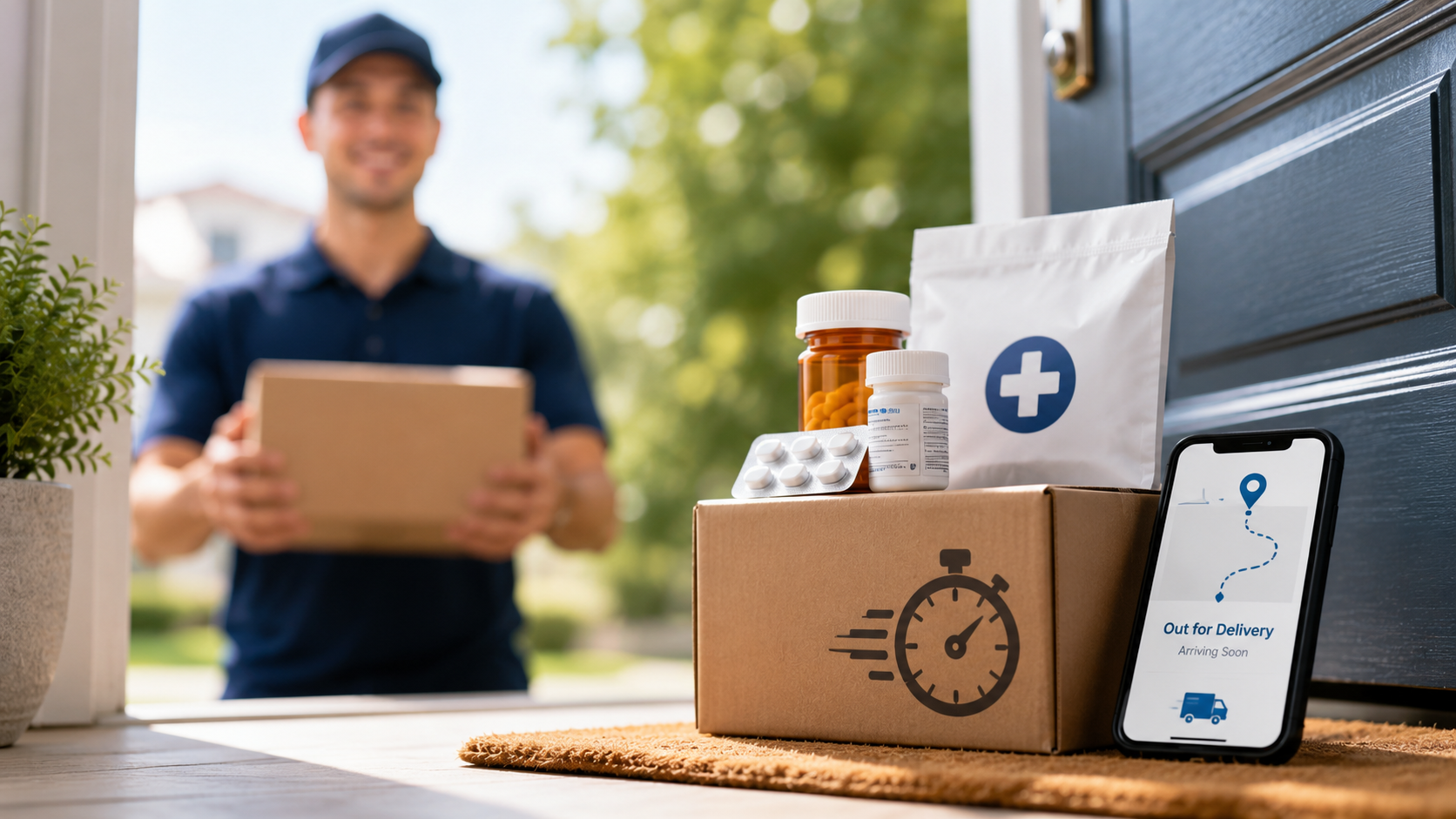
Most patients complete their consultation and receive provider approval within a day or two, with medication shipped shortly after. The full timeline typically runs from a same-day online assessment to home delivery within about a week. However, it depends on the medication, whether labs are required, and the pharmacy’s shipping schedule.
Compare that to the average wait for a new patient appointment with an in-person specialist in many parts of Texas, which can run several weeks. The telehealth model removes that bottleneck because the provider review happens asynchronously rather than around office hours.
Telehealth vs Urgent Care for Prescription Needs
Urgent care is built for immediate, often acute problems and typically charges a walk-in fee even before any treatment starts, with limited ability to manage an ongoing prescription plan. Telehealth is built for exactly the kind of ongoing, non-emergency prescription needs covered here: weight management, hair loss, sexual health, and skincare.
If you are dealing with a true emergency, urgent care or an ER is the right call regardless of insurance status. For planned, recurring prescription treatment, a telehealth visit is generally faster to schedule and less expensive per visit than an uninsured urgent care trip.
How Green Cap Health Helps
Green Cap Health is a U.S.-licensed telehealth practice built specifically for this situation: no insurance, real need for prescription-strength treatment. Patients complete a health assessment online, meet with a licensed U.S. provider, and if approved, receive their medication through a state-licensed pharmacy partner with discreet shipping to their door.
For weight loss specifically, Green Cap Health offers GLP-1 and GLP-1/GIP injection plans starting around $79 for the first month, with membership tiers (Green, Silver, and Gold) that add monthly provider check-ins, lab work, and ongoing support for patients who want more than a one-time script. The same cash-pay, no insurance model applies across hair regrowth, skincare, and sexual health treatments, so patients are not required to pick a single symptom to get help. A free consultation call is available for anyone unsure which plan fits their situation before they commit to anything.
Whatever brought you here, insurance should not be the reason you go without treatment that could genuinely help. In Texas, licensed telehealth has closed that gap, and for most prescription-strength needs, it is a phone call and a short assessment away from starting.
FAQ Section
Q: Can you really get a prescription without health insurance?
A: Yes. Licensed telehealth providers can evaluate and prescribe treatment on a cash-pay basis, with no insurance plan required at any step.
Q: Is it legal to get prescriptions from an online doctor?
A: Yes, as long as the provider is licensed and the medication is dispensed through a licensed pharmacy. The same medical standards apply as an in-person visit.
Q: How much does an online prescription cost without insurance?
A: Costs vary by treatment. Simple prescriptions can run under $50 a month, prescription-strength skincare often runs $60 to $100 a month, and weight loss injections typically start around $80 to $200 a month depending on the plan and medication.
Q: Can I get GLP-1 weight loss medication without insurance?
A: Yes. Because many insurance plans exclude or limit GLP-1 coverage, cash-pay telehealth is one of the most direct ways patients start semaglutide or tirzepatide treatment.
Q: How long does it take to get medication after an online consultation?
A: Most patients get provider approval within a day or two, with medication typically arriving within about a week of the initial consultation.
Q: What treatments can I get through telehealth without insurance?
A: Common categories include weight loss, hair regrowth, sexual health, and prescription-strength skincare, all available through a single online assessment process.
Advance Your Longevity Journey
Our clinical team provides personalized senolytic assessments based on the latest research protocols.