
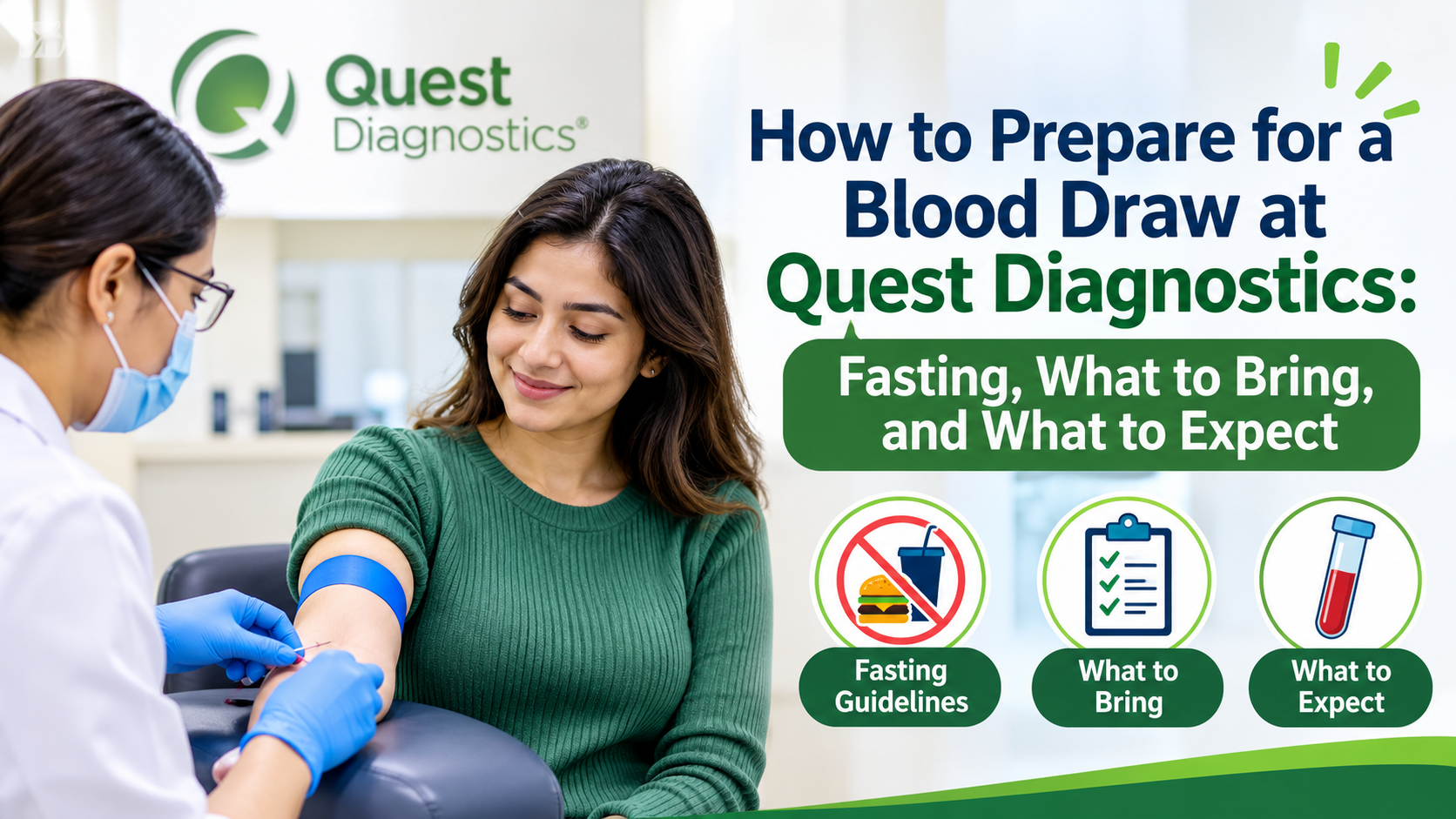
Preparing for a blood test comes down to four things: confirm whether you need to fast, bring a photo ID and your lab order, drink plenty of water, and book an appointment. Fasting usually means 8 to 12 hours with nothing but water, and the draw itself takes only a few minutes.
Green Cap Health is a licensed U.S. telehealth practice for adults who want physician-led care for weight loss, hair regrowth, skincare, and sexual health without insurance. Many patients start with our one-time $65 baseline panel (lipid panel, CMP, A1C, thyroid with TSH, and CBC), so this guide covers what applies at Quest Diagnostics and most other labs.
How do you prepare for a blood test the day before?
Check your order for fasting instructions, hydrate well, and take your regular medications unless your provider says otherwise. Do not wait until the morning of your draw to ask about fasting. Quest warns that a fasting mistake can lead to a rescheduled appointment.
Drink water throughout the day, since hydrated veins are easier to find. If you are having lipid or liver tests, skip alcohol the night before, because it can raise triglycerides and liver enzymes. Choose your outfit now: a short-sleeve shirt or sleeves that roll up easily.
How long should you fast before a blood test?
Most fasting tests call for 8 to 12 hours of nothing but water. That means no food, no coffee, and no juice, even black coffee. Water is encouraged. Medications are usually fine to take, but ask about supplements.
If fasting is hard for you, book an early morning slot so most of the fast happens while you sleep. Pack a snack for afterwards.
Which tests require fasting?
Glucose tests and lipid panels (cholesterol, triglycerides, HDL) usually require it. A comprehensive metabolic panel includes glucose, so it is often drawn fasting too. Tests such as A1C, TSH, and CBC usually do not require fasting, but your order is final. A glucose tolerance test works differently: you arrive fasting and stay for one to six hours so that it may need its own appointment.
What should you bring to Quest Diagnostics?
Bring a valid photo ID and your lab order, printed or on your phone. If your provider sent the order straight to Quest, you do not need a copy. Also bring your insurance card and a payment method if they apply to your visit.
Quest recommends confirming with your provider that the order was sent electronically if you were not handed paper. Bring a snack and water for afterwards.
Appointments vs. walk-ins
Book an appointment when you can. Quest gives appointments priority over walk-ins, so you will usually wait less. With more than 2,000 Patient Service Centres, check that your chosen location is open before you go, especially around holidays.
What to expect during a blood draw
A phlebotomist confirms your name and date of birth, wraps a tourniquet around your upper arm, cleans the skin, and inserts a small needle. They fill a few tubes, remove the needle, and cover the spot with gauze and a bandage. Most of the time is check-in and paperwork, not the draw.
You will feel a quick pinch. To make it easier, stay hydrated, look away if needles bother you, and relax your arm. If you have fainted before, tell the phlebotomist so you can lie down.
After the draw
You can eat and drink right away. Keep the bandage on for a few hours and avoid heavy lifting with that arm for the rest of the day. If you feel dizzy, sit until it passes.
How Green Cap Health fits into your lab visit
Our baseline panel includes a lipid panel and CMP, the tests most likely to need fasting. So book a morning draw at a partner lab near you, fast for the time listed on your order, and bring your ID. Your results go to your provider, who reviews them alongside your intake form.
That matters most when you are starting treatment. Baseline numbers let your provider choose a safe plan and track progress. If you are considering the GLP-1 weight loss program, see which baseline labs to expect for GLP-1 treatment. To see what happens from intake to delivery, read how Green Cap’s online process works.
Green Cap provides care through independent licensed providers, and prescriptions are issued only when clinically appropriate. Your provider has the final say on fasting and special instructions.
FAQ
Q: How long should I fast before a blood test?
A: Usually 8 to 12 hours, with water only. Follow the instructions on your lab order.
Q: Can I drink water or coffee while fasting?
A: Water is fine and helps your veins. Coffee, even black, breaks the fast.
Q: What should I bring to Quest Diagnostics?
A: A photo ID and your lab order, if you have a copy. Bring an insurance card and payment method if applicable.
Q: Do I need an appointment at Quest?
A: Not always, but appointments take priority over walk-ins and usually mean a shorter wait.
Q: What happens during a blood draw?
A: A phlebotomist cleans your arm, inserts a small needle, fills a few tubes, and bandages the spot. It takes only a few minutes.
Q: Can I take my medications before a blood test?
A: Usually yes, unless your provider says otherwise. Ask about supplements.
Advance Your Longevity Journey
Our clinical team provides personalized senolytic assessments based on the latest research protocols.