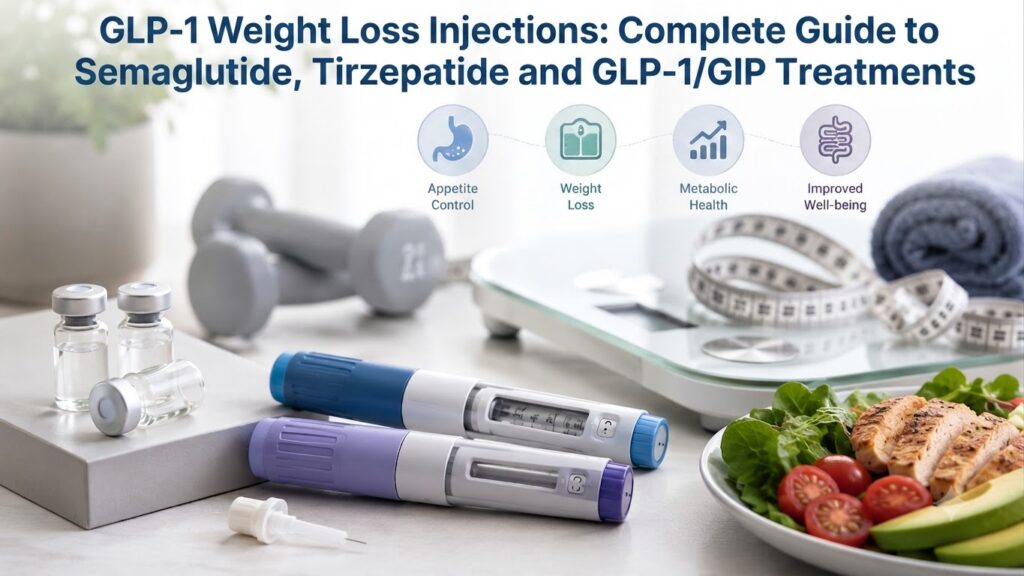


The most useful blood tests before starting GLP-1 treatment are an A1C, a comprehensive metabolic panel, a lipid panel, a thyroid panel with TSH, and a complete blood count. Together, they show your blood sugar, kidney and liver function, cholesterol, and thyroid status before the first injection. Your provider uses them to confirm the medication is appropriate and to measure real progress later.
Green Cap Health is a licensed U.S. telehealth practice. It serves adults who want physician-led weight loss care without insurance or waiting rooms. Its one-time $65 baseline panel covers all five tests above.
Which blood tests before starting GLP-1 matter most?
Five panels cover most GLP-1 baseline blood tests: A1C, a comprehensive metabolic panel (CMP), a lipid panel, a thyroid panel with TSH, and a CBC. No single national rule requires them, but most clinicians order them. They catch blood sugar problems, kidney or liver concerns, and thyroid disease before a medication changes your appetite and hydration.
Depending on your history, a provider may add vitamin B12 (common if you take metformin), vitamin D, fasting insulin, or lipase if you have had pancreatitis. Women of childbearing age may also need a pregnancy test, since GLP-1 medications are not used during pregnancy.
Why does an A1C test come first?
A1C reflects your average blood sugar over roughly three months. Below 5.7% is normal, 5.7% to 6.4% points to prediabetes, and 6.5% or higher suggests diabetes. That number changes the conversation. It tells your provider whether you need weight management, diabetes care, or both.
An A1C test before GLP-1 treatment also matters for safety. If you take insulin or a sulfonylurea, a GLP-1 can raise your risk of low blood sugar, so doses of those drugs may need adjusting. And your starting A1C becomes the benchmark that shows whether treatment is working.
What do kidney, liver, and electrolyte results tell your provider?
A CMP measures creatinine and eGFR (kidney function), liver enzymes such as ALT and AST, sodium, potassium, and glucose. These GLP-1 lab tests matter because nausea, vomiting, and diarrhoea can cause dehydration, which can strain the kidneys. Knowing your starting kidney function lets your provider interpret any later change correctly.
Liver enzymes tell a similar story. Fatty liver is common in people carrying extra weight. Mildly elevated ALT is rarely a barrier to treatment, but a baseline helps your provider separate a pre-existing pattern from something new.
Do lipid and thyroid results change the plan?
Lipid results (LDL, HDL, triglycerides) rarely block treatment, but they matter. Cholesterol and triglycerides often improve with weight loss, and your baseline lets you see that change. Very high triglycerides also raise pancreatitis concerns, which is one reason providers look at them first.
TSH screens for an underactive or overactive thyroid. Hypothyroidism can contribute to weight gain, and treating it may change what results you should expect.
Thyroid history matters more than a thyroid lab.
Semaglutide and tirzepatide carry a boxed warning about thyroid C cell tumours seen in rodents. That is not something a routine blood test detects. Your provider will ask whether you or a close relative has had medullary thyroid carcinoma or Multiple Endocrine Neoplasia syndrome type 2. Answer that intake question carefully, because a yes usually rules these medications out.
Is blood work before semaglutide different from tirzepatide?
No. Blood work before semaglutide and blood tests before tirzepatide overlap almost entirely. Both medications slow stomach emptying and share similar digestive side effects, so glucose, kidney function, and hydration matter for both. Any difference in what your provider orders comes from your personal history, not from the drug.
How can you get GLP-1 lab tests without insurance?
You can order a baseline panel directly through a telehealth practice, and you don’t need insurance to do it. Green Cap Health offers a one-time lab panel for $65 at a partner lab near you. It includes a lipid panel, CMP, A1C, thyroid (TSH), and CBC.
Your results go to your provider, who reviews them alongside your intake form before approving a plan. If you qualify, that may be compounded semaglutide at $89.50 a month or a GLP-1 and GIP injection. Compounded medications are not FDA-approved, and prescriptions are issued only when clinically appropriate. If cost is your main concern, this guide on prescription treatment without insurance explains your options.
It is a practical way to start the GLP-1 weight loss program with data instead of guesswork. Green Cap includes unlimited provider visits and biweekly check-ins, so your labs inform an ongoing plan rather than a one-time visit.
What does GLP-1 medication monitoring look like after you start?
Providers commonly recheck A1C around three months in, then every six to twelve months. They may repeat the CMP and lipid panel after dose increases or if symptoms appear. Your provider sets the actual schedule.
Between labs, report severe or persistent abdominal pain, repeated vomiting, yellowing skin or eyes, or noticeably reduced urination right away. These can signal pancreatitis, gallbladder problems, or dehydration. For a fuller look at how the medications work, see the complete guide to semaglutide, tirzepatide and GLP-1/GIP treatments.
FAQ
Q: Do I need blood work before starting a GLP-1?
A: Most providers order it. Labels do not mandate specific tests, but baseline labs help confirm the medication is safe for you and give you a benchmark for progress.
Q: Is an A1C test required before a GLP-1?
A: It is not legally required, but it is standard practice. A1C shows whether you have prediabetes or diabetes and affects how safely other glucose-lowering drugs can be combined with a GLP-1.
Q: Are the labs different for semaglutide and tirzepatide?
A: No. The baseline panel is nearly identical. Your medical history, not the drug, drives any extra tests.
Q: Which labs check kidney and liver safety?
A: A comprehensive metabolic panel. It reports creatinine, eGFR, and liver enzymes, along with electrolytes and glucose.
Q: How much do GLP-1 baseline labs cost without insurance?
A: Green Cap Health offers a one-time panel for $65 at a partner lab, covering a lipid panel, CMP, A1C, thyroid (TSH), and CBC.
Q: How often are labs repeated after starting?
A: Often around three months, then every six to twelve months. Your provider adjusts the timing based on your results and any dose changes.
Advance Your Longevity Journey
Our clinical team provides personalized senolytic assessments based on the latest research protocols.