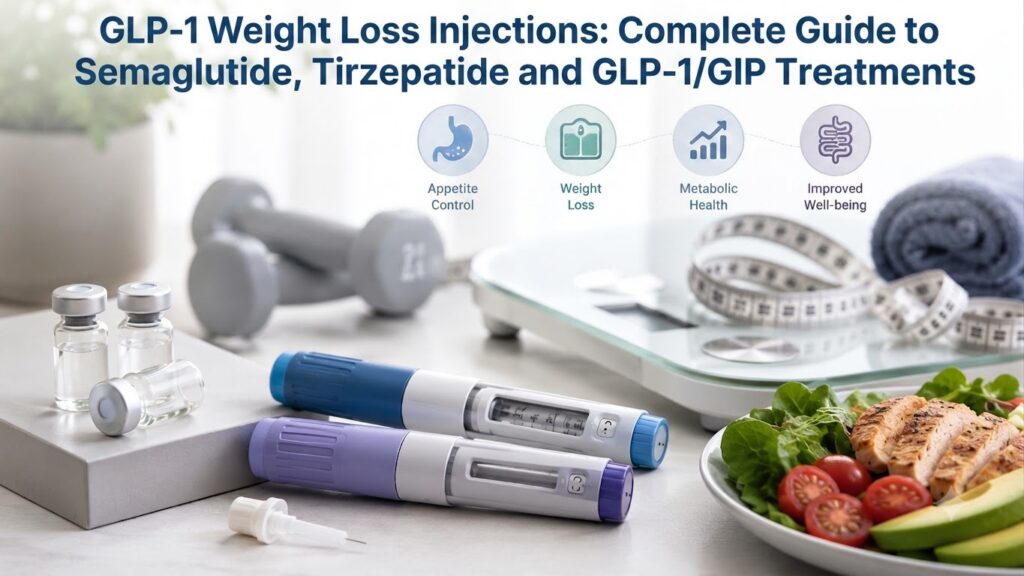

Unclear about how semaglutide works? You’re not alone. Semaglutide reduces appetite by mimicking a natural gut hormone that signals your brain that you’re full. This results in fat loss by lowering food intake over time. It’s not magic or a shortcut, but for adults with obesity or related health conditions, this information may help you decide if it’s right for you.
How Semaglutide Suppresses Appetite: The Biology Behind It
What GLP-1 Actually Does
Your digestive system is more intelligent than most people realise. After you eat, your gut releases a hormone called glucagon-like peptide-1 (GLP-1). This hormone does several things at once: it signals to your brain that you’ve eaten enough, slows the rate at which food leaves your stomach, and helps regulate blood sugar by stimulating insulin release.
In people with obesity, this system often works less efficiently. The hunger-off signal can be weak, delayed, or outweighed by other hormones. As a result, many people feel hungry again sooner than they need to.
How Semaglutide Steps In
Semaglutide is a GLP-1 receptor agonist, meaning it binds and activates the same receptors as GLP-1, but with greater consistency and longer duration of action. As a weekly injection, it keeps these receptors engaged all week, not just after meals.
This is exactly how semaglutide suppresses appetite at a biological level. By keeping GLP-1 receptors consistently activated, semaglutide:
Reduces how often and how strongly the brain’s appetite centres signal hunger. Prolongs fullness after meals by slowing the rate at which the stomach empties. Helps keep blood sugar stable, preventing energy crashes that often trigger reactive or emotional eating.
These effects are physiological, not psychological. That distinction reframes weight management from a matter of willpower to one of hormonal function.

How Semaglutide Triggers Fat Loss
The Connection Between Appetite Reduction and Fat Loss
When the body consistently takes in fewer calories than it expends, it begins drawing on stored fat for energy. This process, lipolysis, is the foundation of fat loss.
Semaglutide doesn’t directly burn fat. What it does is create the conditions that enable sustained caloric reduction. For many people, the reason they struggle with fat loss isn’t that they don’t know what to do. It’s that biological hunger signals make consistent execution nearly impossible. Semaglutide’s fat-loss mechanism works by reducing biological resistance.
What Clinical Trials Showed
In the STEP 1 clinical trial, adults using semaglutide for chronic weight loss management lost an average of approximately 14.9% of their body weight over 68 weeks, compared to about 2.4% in the placebo group. Importantly, participants also followed structured lifestyle guidance, received nutritional counselling, and increased their physical activity. That combination consistently outperforms medication alone.
The weight lost wasn’t just cosmetic. Participants saw measurable improvements in blood pressure, HDL cholesterol, fasting blood glucose, and inflammatory markers. These are the kinds of metabolic shifts that reduce long-term cardiovascular and diabetes risk.
Who Does This Actually Help
Semaglutide Candidate Criteria
Semaglutide is FDA-approved for chronic weight management in adults with a BMI of 30 or higher, or a BMI of 27 or higher alongside at least one weight-related condition such as hypertension, prediabetes, or dyslipidemia.
It’s designed for people who have made genuine, sustained efforts through diet and exercise and found that biology keeps getting in the way. Not people looking for a quick fix, but individuals who need a clinically supported tool to level the physiological playing field.
Medical evaluation is always required before starting semaglutide. A licensed provider will assess your health history, current medications, and metabolic markers to determine whether it’s appropriate and safe for you specifically.
What to Expect During Treatment
The Dose Titration Process
Treatment begins with a low dose, which is typically increased over several weeks in a process called titration. This gradual ramp-up isn’t bureaucratic, it’s practical. It gives your body time to adapt to the medication and significantly reduces the most common gastrointestinal side effects during early treatment.
Common early side effects include mild nausea, changes in bowel habits, or occasional fatigue. These typically improve within a few weeks as the body adjusts. More serious risks are rare but real, and require discussion with your clinical provider before starting.
Medication as One Part of a Larger Plan
Semaglutide works best and has the longest-lasting effects when paired with meaningful lifestyle changes. Clinical programs that include nutritional guidance, physical activity, and regular provider check-ins consistently produce stronger outcomes than medication alone.
At Green Cap Health, our licensed clinicians provide personalised, clinician-guided weight management programs that may include semaglutide for qualifying patients. Everything is handled online, privately, with no insurance required and discreet delivery to your door.
If you’ve been wondering whether there’s a treatment that works with your biology rather than against it, this might be worth exploring with a provider.
Explore Green Cap Health’s weight management programs. Schedule your online consultation.
Frequently Asked Questions
Q: How does semaglutide suppress appetite specifically?
A: Semaglutide activates GLP-1 receptors in the brain’s appetite centres and in the gut. This reduces the frequency of hunger signals, extends post-meal fullness, and stabilises blood sugar, all of which contribute to eating less without constant conscious restriction.
Q: Does semaglutide burn fat directly?
A: No. Semaglutide doesn’t directly metabolise fat tissue. It reduces appetite and caloric intake, creating a caloric deficit that prompts the body to burn stored fat for energy over time.
Q: How long before semaglutide reduces hunger?
A: Most patients notice a reduction in appetite within the first 2 to 4 weeks. The effect typically becomes more consistent over 8 to 12 weeks as dosing increases.
Q: Can you take semaglutide without changing your diet?
A: Technically, yes, but results are meaningfully better with dietary adjustments. Semaglutide reduces the biological drive to overeat, but the quality of your nutrition still influences how effectively your body uses that reduction.
Q: Is semaglutide a long-term medication?
A: It’s intended for ongoing use as part of a chronic weight management strategy. Many patients regain weight after stopping, which is why sustainable lifestyle habits are built into effective treatment programs from the start.
Advance Your Longevity Journey
Our clinical team provides personalized senolytic assessments based on the latest research protocols.